
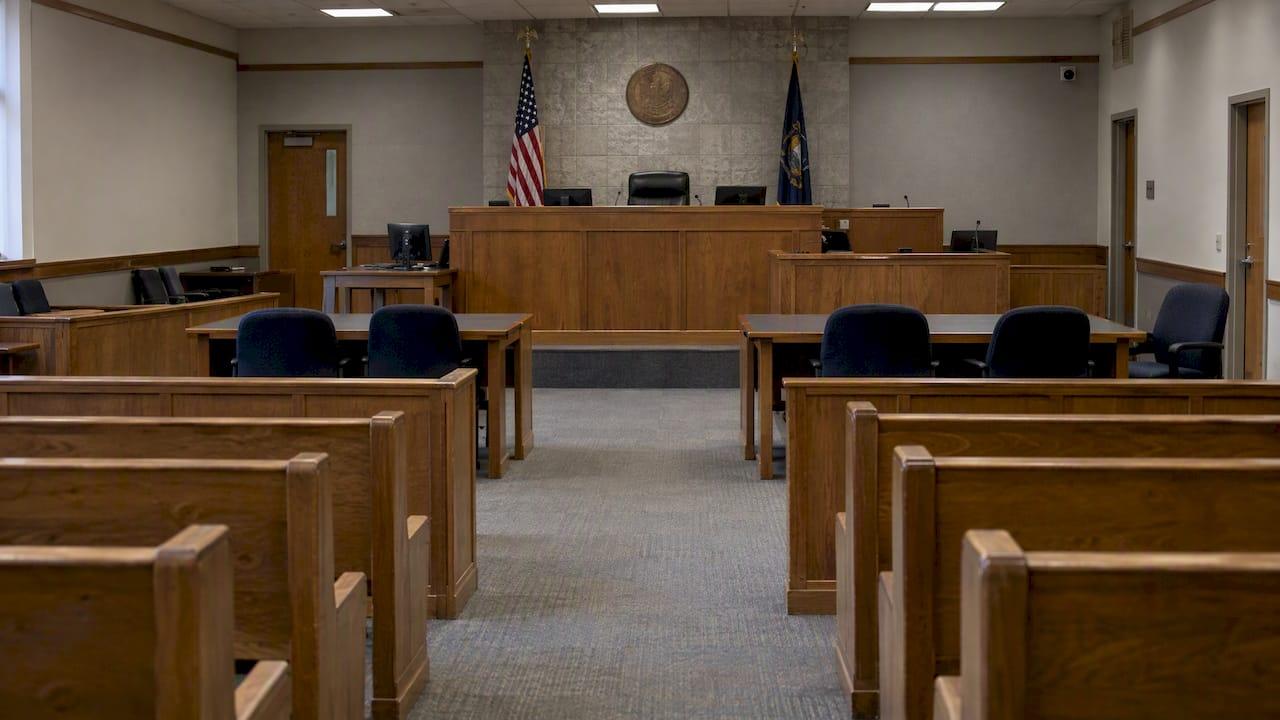
If you were arrested or charged in Portsmouth, your case starts at the 10th Circuit, District Division, Portsmouth, at 111 Parrott Avenue. Your first appearance there is the arraignment. It is a short hearing about your plea, your right to a lawyer and your bail conditions. It is not the place to argue your side with witnesses or photos. What you do in the days before it, and what you do about any license suspension, often shapes the rest of the case.
This guide walks through the first weeks: where to go, what the judge will do, how felonies differ from misdemeanors, which deadlines run on their own clock, and when a lawyer matters most. It is general information, not advice on your particular case.
TL;DR
- Portsmouth cases begin at the 10th Circuit District Division on Parrott Avenue. Your arrest paperwork, summons or bail order gives the arraignment date.
- Bring your paperwork to the arraignment, not witnesses or evidence. The court says those belong at trial.
- A felony is handled differently. The District Division takes no plea on it, and the case goes to a probable-cause hearing or a grand jury.
- A DUI or DWI has a second track: a license suspension with a 30-day written deadline that does not wait for the criminal case.
- Speak to a criminal defense lawyer before the arraignment, not after you have entered a plea.
Table of Contents
- Where your case is heard and when
- What happens at a Portsmouth misdemeanor arraignment
- What to bring, and what to leave at home
- If the charge is a felony
- A DUI or DWI arrest: two cases at once
- Students: a UNH Title IX matter is a separate proceeding
- Other charges that often start in the same courtroom
- Our perspective: the first appearance is for protecting options
- After the case: do not assume the record disappears
- Talk to a defense lawyer before your Portsmouth arraignment
- FAQ
- Sources
Where your case is heard and when
The Judicial Branch lists the 10th Circuit, District Division, Portsmouth at 111 Parrott Avenue, Portsmouth, NH 03801-4490. Court hours are listed as Monday through Friday, 8:00 a.m. to 4:00 p.m. Check current access and courtroom instructions before you go.
The date is on your paperwork. The summons or bail order states the arraignment date, and the court generally sends no further notice. If you lose the paperwork, do not guess. Call the court clerk or have a lawyer confirm the date, because missing an arraignment creates a new problem on top of the original charge.
The timing depends on whether you were held:
- Detained after arrest: under Rule 4 of the criminal procedure rules, arraignment is generally within 24 hours, excluding weekends and holidays. The rule states a 36-hour exception in one specified situation involving attorney availability.
- Released with a summons or on bail: arraignment is generally scheduled no earlier than 35 days after release.
That gap of up to five weeks is the most useful time you have. For more on how the timing rules play out, see our article on arraignment in New Hampshire and why your plea matters.
What happens at a Portsmouth misdemeanor arraignment
According to Rule 4, the court advises you of the charge, the possible penalties, your privilege against self-incrimination and your right to counsel. You may then plead guilty, not guilty, or, with the court’s consent, nolo contendere.
In practice, the hearing usually goes like this:
- The judge or clerk explains the charge and your rights, often to a group of defendants at once.
- You are asked how you plead.
- Bail and release conditions are addressed. These can include no-contact terms, travel limits or alcohol restrictions.
- If you plead not guilty, a later trial date is set.
A not-guilty plea at this stage is not a claim that you will prove anything that day. It keeps every option open while your lawyer reviews the evidence. Pleading guilty at the first hearing, before anyone has read the police report, closes those options. The court’s own guidance says that if you plan to plead guilty or nolo, you should bring the fine money, which tells you how quickly a plea can turn into a finished case.
If your charge is a misdemeanor, the class matters for penalties and for later annulment. Our page on misdemeanor defense in New Hampshire explains Class A and Class B, and our piece on misdemeanor versus felony covers the line between them.
What to bring, and what to leave at home
The Judicial Branch is direct on this point: bring any paperwork from your arrest or summons, and do not bring witnesses or evidence to the first appearance. The one exception is when your first appearance is itself a trial, as with some motor vehicle matters.
A short checklist:
- Every document you were handed: summons, bail order, release conditions, tickets.
- A list of your questions about the charge, for your lawyer.
- Photo ID, and a plan for getting to Parrott Avenue on time.
- Do not bring photos, text messages or witnesses to hand to the judge.
That does not mean evidence is unimportant. Gather it privately and give it to your lawyer: screenshots, names of witnesses, medical records, receipts, video you know exists. Do not delete anything from your phone or social media. Do not message the other person involved. Anything you say to police, to the other party or online can end up in the prosecution’s file.
If the charge is a felony
Felonies run differently. The Judicial Branch explains that the District Division takes no plea on a felony charge. Instead it schedules a probable-cause hearing, or the case begins by grand-jury indictment. A felony defendant may apply for appointed counsel, and Superior Court is New Hampshire’s forum for jury trials.
The same page separates class A and class B felonies and notes that conviction can expose a defendant to State Prison, fines and probation. Our article on felony classes and prison terms under RSA 625:9 lays out the ranges, and our felony defense page describes how we approach these cases.
The practical point is that felony cases give a defense lawyer more room to act before any plea. A probable-cause hearing is a chance to test whether the State can support the charge. That window is worth using.
A DUI or DWI arrest: two cases at once
In New Hampshire, a drunk-driving arrest creates a criminal case in court and an administrative license case with the DMV. They run separately. The Portsmouth arraignment does not stop the suspension clock.
Under RSA 265-A:31, a request for an administrative review or hearing must be in writing and must reach the department within 30 days of the suspension notice. Requesting a review does not by itself stay the suspension. The hearing is generally held within 20 days after the request, subject to continuance rules, and its issues are narrow: reasonable grounds, the arrest, the refusal or test result, and the required warnings.
If you refused a test, the length of suspension depends on the version of RSA 265-A:14 in effect on the date of the incident. The statute displays 180 days for certain first refusals and 2 years for certain prior-refusal or prior-conviction cases before January 1, 2027. It shows 9 months and 3 years in the version effective January 1, 2027. A generic online summary may quote the wrong version, so have counsel check the text that applies to your arrest date.
Gather these immediately:
- The suspension or revocation notice
- The implied-consent warnings you were given
- Any testing or refusal records
- The arrest paperwork
For a step-by-step view, read our 30-day DUI license suspension checklist and our article on the suspension after a blood test refusal. If you hold a license from another state, see what out-of-state drivers face after a New Hampshire DUI. Non-citizens should read about immigration consequences after a DUI before taking any plea.
Students: a UNH Title IX matter is a separate proceeding
Portsmouth is close to the University of New Hampshire in Durham, and a student arrested in a related incident can face two proceedings: the criminal case and a university process. They are not the same.
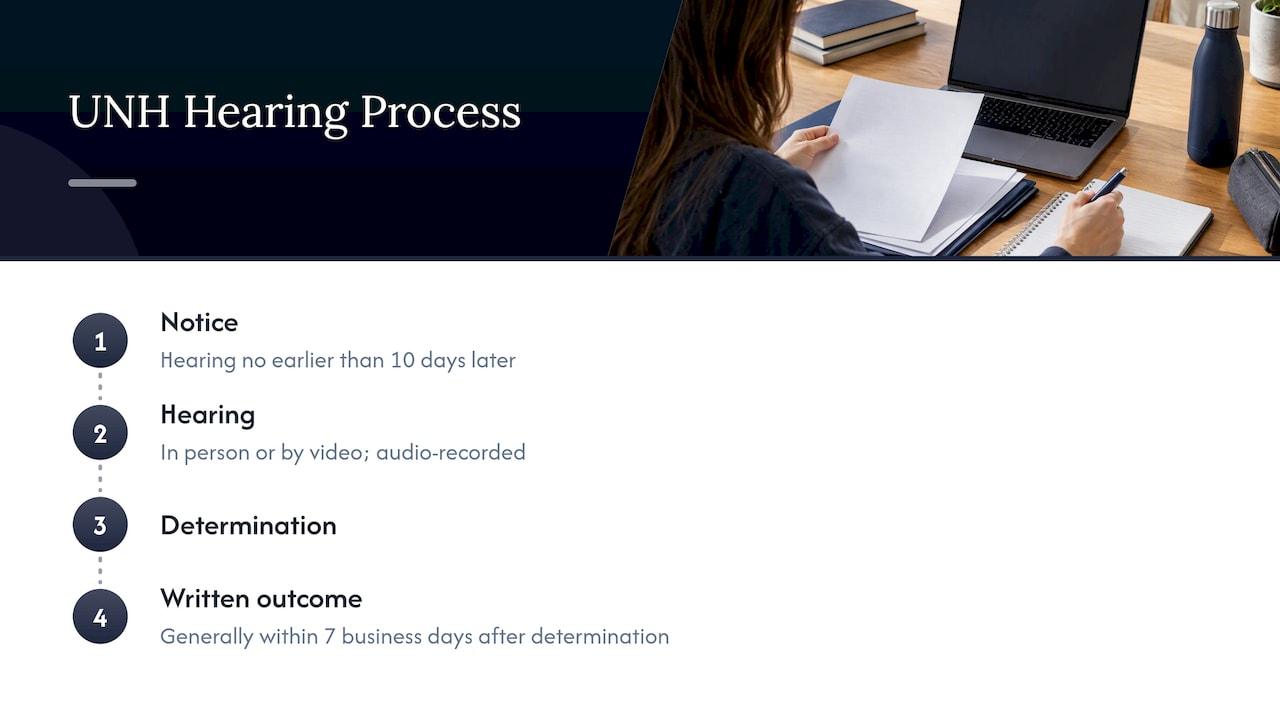
UNH’s policy on sexual misconduct, dated June 25, 2025, says each hearing party must have an advisor. The advisor may ask relevant questions in real time but may not advocate for, answer for or otherwise speak on behalf of the party. The hearing is scheduled no earlier than 10 days after notice, and the written outcome is generally provided within 7 business days after the determination. Hearings may be in person or by video and are audio-recorded by the university.
Two things follow. First, you will give your own testimony, so preparation matters. Second, anything you say in the university process can matter in the criminal case, so the two must be coordinated. Our guide on what accused UNH students should do first covers the 10-day window in detail.
Other charges that often start in the same courtroom
Some charges bring extra orders with them:
- Domestic violence: release conditions can bar contact or remove you from your home on day one. See our page on domestic violence defense and the article on domestic violence versus assault.
- Restraining orders: a separate civil process with its own hearing. Our 30-day playbook for defending a restraining order explains the steps.
- Drug possession: a first-level charge can look minor, but a record has consequences. Read what to do after a drug possession arrest in NH.
- Assault: degree and injury drive the classification. See second-degree assault in NH.
Our perspective: the first appearance is for protecting options
People arrive at a first hearing believing they must explain themselves. They do not. The court’s own guidance tells defendants to leave witnesses and evidence at home, because the arraignment is about plea, counsel and bail.
We see the real value of a lawyer before arraignment as preventing avoidable procedural harm. A lawyer can read the complaint, identify the charge classification, address bail conditions, preserve defenses, and decide whether an appearance or a waiver is appropriate under the rules. That is quieter work than a courtroom speech, and it matters more.
We handle criminal defense only, and our approach is to prepare every case as if it is going to trial. That is what creates leverage in any negotiation, because a prosecutor can tell when a defense file is thin. You also deal directly with your attorney from first contact, and we represent clients in English and Spanish.
— Walter Ramos
After the case: do not assume the record disappears
A dismissal, acquittal or completed sentence does not clear your record by itself in every situation. Look at annulment.
Under RSA 651:5, the waiting periods include 2 years for many class B misdemeanors, 3 years for class A misdemeanors, 5 years for class B felonies and 10 years for class A felonies. Certain violent crimes are excluded. Qualifying dismissed or not-guilty matters disposed of on or after January 1, 2019 are annulled under a 30-day timing rule, subject to the statute’s conditions.
If you must apply, Rule 31 requires you to identify the defendant, offense, sentence and docket number, explain the facts supporting annulment, sign and swear the application, and address the filing fee. Notice is issued within 7 days, and parties generally have 30 days to respond.
Our annulment checklist shows how one ineligible conviction can block the rest. Our guide to how long a DUI stays on your record covers the 10-year question.
Talk to a defense lawyer before your Portsmouth arraignment
Granite Criminal Defense represents people charged with DUI and DWI, misdemeanors, felonies, drug, assault, gun and domestic violence offenses, and handles UNH Title IX matters and annulments. If your arraignment date is coming, see our practice areas or contact the firm so your attorney can review the paperwork before you stand in front of the judge.
FAQ
Do I need a lawyer at my first appearance in Portsmouth?
You are not required to have one, and the judge will advise you of your right to counsel. But the arraignment is where you enter a plea and where bail conditions are set. Having a lawyer review the complaint before that day helps you avoid a plea you cannot take back.
Should I bring my evidence or witnesses to the arraignment?
No. The court says to bring your arrest or summons paperwork and to leave witnesses and evidence at home, because they are for trial. Give your evidence to your lawyer instead.
What if I was arrested for a felony in Portsmouth?
The District Division does not take a plea on a felony. The case goes to a probable-cause hearing, or begins with a grand-jury indictment, and a jury trial would be in Superior Court. You can apply for appointed counsel if you cannot afford a lawyer, but earlier private representation gives your defense more time.
Does the DUI court case stop my license suspension?
No. The DMV process is separate. A written request for review or hearing must reach the department within 30 days of the suspension notice, and requesting one does not by itself stay the suspension.
Can I annul my record after the case ends?
Often, but not automatically. Eligibility depends on the offense, the disposition date, completion of the sentence, any later record and statutory exclusions. A lawyer can check your situation against RSA 651:5.
Sources
- Rockingham County District Divisions, NH Judicial Branch
- Rule 4, Initial Proceedings in Circuit Court-District Division
- What to Bring, District Division Criminal
- Definitions, Superior Court Criminal
- RSA 265-A:31 Administrative Review and Hearings
- RSA 265-A:14 Refusal of Consent
- UNH Policy Prohibiting Sexual Misconduct
- RSA 651:5 Annulment of Criminal Records
- Rule 31, Annulments
Recommended
- 48 Hour Rule in New Hampshire Arraignments and Why Your Plea Matters
- The NH Court System Explained: Where Your Case Actually Goes
- Prosecutor’s Notice Can Convert Class B Misdemeanors to Class A in NH
- Facing Up to 15 Years? NH Assault Penalties Mapped to Your Facts
This article is general information about New Hampshire criminal law, not legal advice, and does not create an attorney-client relationship with Granite Criminal Defense. Laws and court procedures change and every case is different. If you have been charged anywhere in Rockingham, Strafford, Hillsborough, Merrimack, Belknap or Carroll County, call us.
