

Stop giving statements and get an advisor or attorney before any substantive meeting. Then preserve your evidence and ask about supportive measures, which are available right away. The 10-day evidence review period is the point where you can shape the record, so protect it. Statements to the university can be used in a criminal investigation.
TL;DR:
- UNH guidance asks students to notify the Title IX Coordinator at least 24 hours before private counsel attends a meeting.
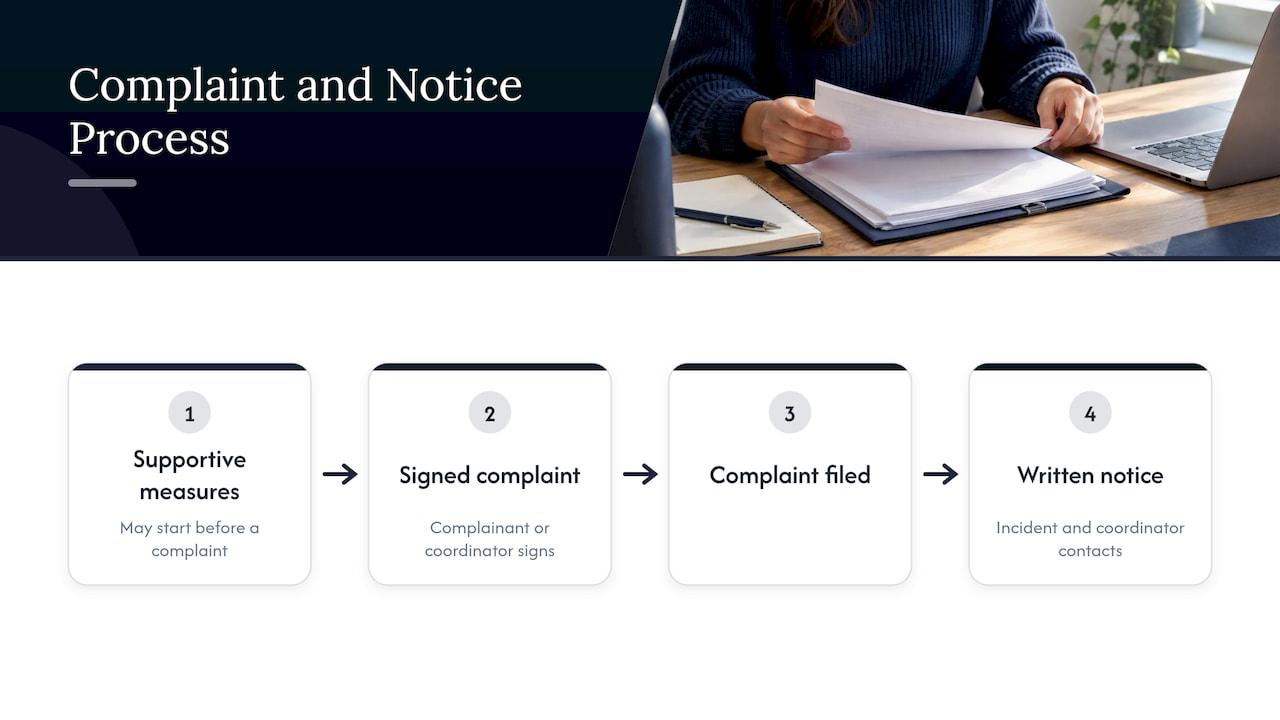
- A formal grievance begins only when the complainant or Title IX Coordinator signs a complaint; supportive measures may begin earlier.
- During the evidence review, cite errors by page number, add corroborating messages or witness details, and omit irrelevant character or mental health material.
- Hearing notices arrive at least 10 days before the hearing, objections are due within 3 days, and appeals must be filed within 10 working days.
Table of Contents
- What should you do in the first 24 to 48 hours?
- How is a formal complaint filed, and what does the Notice of Allegations say?
- What rights do you have as the accused student?
- How does the 10-day evidence review work?
- What happens at the hearing, and how do appeals work?
- Why does a parallel criminal investigation change your strategy?
- Who should you contact at UNH right now?
- Why early counsel changes everything
- How can we help you start the UNH Title IX process on solid footing?
- FAQ
- Sources
What should you do in the first 24 to 48 hours?
Move in this order. Speed matters less than discipline: a calm, organized approach can help you avoid mistakes.
- Decline voluntary statements. Do not explain, apologize or “clear things up” with investigators, the complainant or mutual friends.
- Contact an advisor or attorney. UNH practitioner guidance says you may choose your own advisor, including legal counsel at your own expense, and that you should notify the Title IX Coordinator at least 24 hours before counsel attends a meeting.
- Write a dated timeline of your version of events, and save texts, social media messages, photos and location data. Do not delete anything.
- Request supportive measures such as schedule, housing or academic changes if your classes or safety are disrupted.
- List potential witnesses and their contact details. Do not coach them or edit their accounts.
Pro Tip: Write your timeline for your advisor only, and keep it out of group chats and email threads to friends.
How is a formal complaint filed, and what does the Notice of Allegations say?
A Title IX investigation begins after a formal complaint is signed by the complainant or by the Title IX Coordinator, according to the UNH sexual misconduct policy. The Title IX Coordinator may sign a formal complaint. Once a complaint is filed, you receive a written Notice of Allegations. The Notice of Allegations provides information about the incident and contact details for the Title IX Coordinator. Review the notice carefully and keep the original.
Supportive measures can start even before any formal complaint exists, so a call from the Civil Rights & Equity Office does not always mean a case is open. Read every document slowly, and keep the originals.
What rights do you have as the accused student?
You hold several procedural protections from the first meeting onward:
- An advisor of your choice. Both parties may select one. The UNH personnel policy describes a university-provided advisor available free of charge for preparation, and you may bring private counsel instead.
- Supportive measures. These are non-punitive steps that preserve access to education. Asking for them does not imply responsibility.
- Sensitive records. Ask your advisor how medical, psychological or other sensitive records may be handled in the grievance process.
An advisor can help you prepare for meetings and the hearing. An attorney can also review your statements with you.
How does the 10-day evidence review work?
UNH gives each party 10 days to inspect the evidence directly related to the allegations and to submit written comments. Use this window to review the evidence and submit written comments or corrections. Work through it in order:
- Read every exhibit and the full report, and mark factual errors with page references.
- Gather corroborating material: messages, timestamps, photos and witness names.
- Write a concise response that answers the allegations with evidence, not emotion.
- Cut anything irrelevant. Investigator guidance emphasizes relevance, and a large pile of character or mental-health material can bury the facts that help you.
Pro Tip: Skipping this review limits your ability to shape the record, so treat it as your main chance to submit exculpatory evidence.
What happens at the hearing, and how do appeals work?
The structure is predictable, and the deadlines are short:
- Notice of Hearing: You receive it at least 10 days before the hearing, per the UNH policy cited above.
- Objections: You have 3 days from receiving the notice to object to the assigned decision-maker or panel member for bias or conflict of interest, according to the UNH policy.
- Standard of proof: UNH uses the preponderance of the evidence standard, meaning more likely than not.
- Appeals: Both parties may appeal in writing within 10 working days of the Notice of Outcome.
Because the objection window is so brief, have your advisor review the names on the notice the day it arrives. For a closer look at advisor questioning at hearings, see our article on Title IX cross examination.
Why does a parallel criminal investigation change your strategy?
The university process and a criminal case are separate, and their standards of proof differ. New Hampshire’s RSA 188-H governs campus policies, and what you tell the university can be used in a criminal investigation. The UNH policy prohibiting sexual misconduct recognizes that both tracks can proceed at once.
- Statements to the university can be used in a criminal investigation.
- Counsel can help you avoid admissions that complicate a criminal defense.
- An attorney can coordinate evidence preservation and witness contact across both tracks.
- Consider how university procedures and any criminal investigation may affect one another.
Our 48 hour plan for the UNH disciplinary process walks through the same early window.
Who should you contact at UNH right now?
Start with these offices, and keep a log of every call and email:
- Title IX Coordinator: Bo Zaryckyj, Thompson Hall, 603-862-2930, Bo.Zaryckyj@unh.edu, as listed in the UNH policy and on the CREO staff page.
- Civil Rights & Equity Office (CREO): formal complaint filing, supportive measures and investigator assignment.
- Confidential and medical resources: identified in UNH policy under RSA 188-H, for support that does not run through the investigation.
Why early counsel changes everything
Some students may want to address the situation by talking. That instinct costs them. An advisor can help you consider your options before you respond.
Treat the 10-day review as an opportunity to provide focused, evidence-based comments. A focused, evidence-centered response can help clarify the record for the decision-maker. Before you meet with CREO or any investigator, prepare your timeline, your witness list and your key documents, then walk through them with counsel. Coordination with criminal counsel may help you address both processes.
— Walter Ramos
How can we help you start the UNH Title IX process on solid footing?
When your future at UNH is on the line, consider speaking with a lawyer experienced in these cases. Our attorneys defend criminal charges across New Hampshire, and our UNH Title IX defense team represents students at campus hearings and in parallel criminal matters. Our attorneys are former prosecutors, and we prepare cases with the possibility of a hearing or trial in mind.
A first consultation covers:
- An early assessment of your Notice of Allegations
- Guidance on interviews and the evidence review
- Representation at campus hearings or in a related criminal case
Bring your Notice of Allegations, any evidence you hold, witness contact details and your timeline notes. You speak directly with an attorney from the first contact. Review our practice areas and contact us today to schedule your consultation.
This article is general information, not a substitute for advice from a qualified lawyer. Consult a qualified legal professional about your own circumstances before acting on anything here.
FAQ
What are the steps of a Title IX investigation?
A formal complaint is signed, then the respondent receives a Notice of Allegations. Parties review evidence for 10 days, and the hearing process follows a Notice of Hearing. The outcome may be appealed in writing within 10 working days, as described in the UNH policy.
What happens after a Title IX investigation is completed?
The parties receive an investigative report for review, and the hearing decision-maker applies the preponderance of the evidence standard. The parties may appeal the outcome in writing.
What triggers the start of a Title IX grievance process?
A formal complaint signed by the complainant or the Title IX Coordinator starts it. Supportive measures can be available before a formal complaint is filed, and requesting them does not by itself mean an investigation has begun.
Should I talk to the Title IX office before getting a lawyer?
Speak with an advisor or attorney first. UNH practitioner guidance recommends hiring counsel early to vet statements and coordinate with any parallel criminal defense.
Sources
Recommended
- UNH Title IX Defense Attorney | New Hampshire
- 48 Hour Plan for the UNH Disciplinary Process: Lawyer Steps to Take
- When Cross Examination Decides a Case: Title IX Rules Advisors Need
This article is general information about New Hampshire criminal law, not legal advice, and does not create an attorney-client relationship with Granite Criminal Defense. Laws and court procedures change and every case is different. If you have been charged anywhere in Rockingham, Strafford, Hillsborough, Merrimack, Belknap or Carroll County, call us.
