
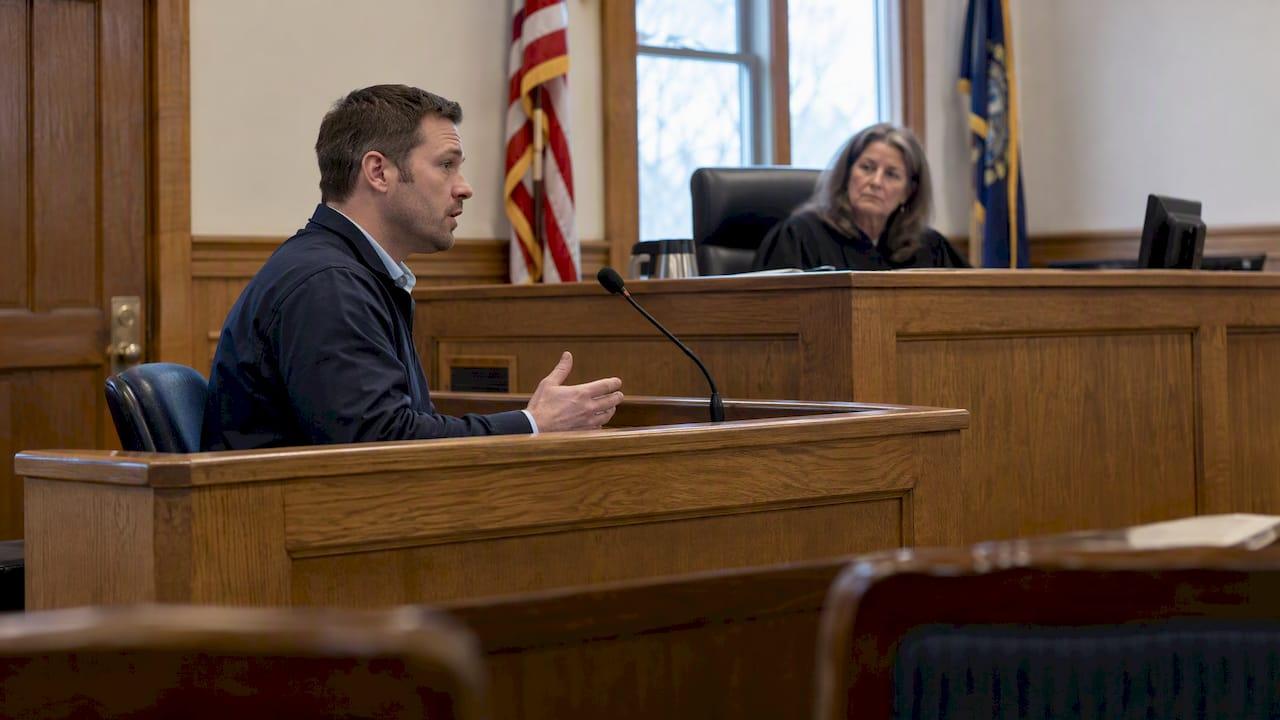
Yes, you can defend a restraining order in New Hampshire, but you need to act immediately: do not contact the petitioner, preserve every text, photo, and document connected to the case, request your hearing packet, and bring in a defense attorney before your court date. A violation of a protective order under RSA 173-B:9 can turn a civil matter into a criminal charge fast, so the window to prepare is short and the stakes are real.
TL;DR:
- Temporary orders can take effect before notice, and hearings must occur within 30 days of filing or 10 days of service, whichever is later.
- Live witness testimony carries more weight than written statements, so arrange for witnesses to attend and bring labeled, authenticated exhibits in triplicate.
- Violating a state protective order is a class A misdemeanor; police may arrest on probable cause, and a second violation within six years brings enhanced penalties.
- Improper service or wrong venue can support dismissal, and inadequate notice may justify a continuance; the petitioner must prove abuse by a preponderance of the evidence.
- A final order can restrict parenting time, require supervised visits, or remove you from a shared home, so bring custody, lease, or ownership records.
Table of Contents
- Types of Restraining Orders in New Hampshire and Who Hears Them
- What a Judge Can Order and What Happens if You Violate It
- Evidence and Witnesses That Actually Move the Needle at Hearing
- Defenses and Tactics NH Attorneys Use in These Hearings
- From Service to Final Hearing: What the NH Timeline Looks Like
- What Defending a Restraining Order Actually Costs in NH
- Choosing and Working With a Restraining Order Defense Attorney
- How Granite Criminal Defense Prepares Restraining Order Cases
- Inside the Hearing: Roles of the Petitioner and Respondent
- Custody and Visitation Consequences of a Restraining Order
- Author Perspective: What Actually Changes the Outcome
- Get Help Defending a Restraining Order in New Hampshire
- FAQ
- Sources
Types of Restraining Orders in New Hampshire and Who Hears Them
New Hampshire courts issue several kinds of protective orders, and knowing which one applies to you shapes your entire strategy. A judge can grant a temporary, ex parte order without ever notifying you first, based solely on the petitioner’s sworn statement. That order takes effect immediately and stays in place until a hearing where you finally get to respond.
Final protective orders follow under RSA 173-B:5, which spells out the relief a court may grant once both sides have had a chance to present evidence. These domestic violence petitions are handled in the Family Division or District Court, depending on the county.
Civil stalking petitions and harassment-based restraining orders sometimes land in Superior Court instead, particularly when the parties are not family or intimate partners. Venue matters because procedural rules, available relief, and even the burden of proof can shift slightly between courts.
- Temporary ex parte orders are issued without the respondent present and remain active until the final hearing.
- Final protective orders under domestic violence statutes typically go through Family Division or District Court.
- Civil stalking orders without a domestic relationship often proceed through Superior Court.
- Hearing timing is set by statute, and missing a deadline can forfeit your chance to challenge temporary terms early.
If you were served with paperwork and are not sure which track your case falls under, our guide to understanding restraining orders in New Hampshire walks through the distinctions in more detail.
What a Judge Can Order and What Happens if You Violate It
Once a judge finds grounds for a final order, the relief available is broad. Under RSA 173-B:5, the court can impose no-contact provisions, order you to stay away from a shared residence or workplace, require you to relinquish firearms, and set custody or visitation terms for any children involved. None of these provisions are symbolic: each one carries legal weight the moment the judge signs the order.
- No-contact and stay-away provisions covering the petitioner’s home, workplace, and school.
- Firearm relinquishment, often required within 24 hours of the order.
- Temporary custody or parenting-time restrictions affecting shared children.
- Occupancy orders that can remove you from a jointly held residence.
Violating a protective order issued under RSA 173-B is a class A misdemeanor in New Hampshire, and a second violation within six years can bring enhanced penalties. That single fact changes how seriously you need to treat every term of the order, even one that feels unfair or overly broad.
Enforcement runs on two tracks. Police have arrest authority the moment they have probable cause of a violation, meaning you do not get a warning conversation first. Separately, courts can hold you in civil or criminal contempt for ignoring order terms, with criminal contempt sometimes referred to prosecutors for formal charges.
Mutual restraining orders, where both parties restrain each other, are not routine. New Hampshire law generally prohibits mutual orders unless both parties filed petitions and the court independently found abuse by each person against the other. A single petition resulting in an order against only one party is the far more common outcome, and understanding that distinction helps you anticipate what the other side can and cannot ask for.
Evidence and Witnesses That Actually Move the Needle at Hearing
Hearings on protective orders are not decided on paperwork alone. Judicial Branch protocols make clear that live testimony carries far more weight than written statements, and a respondent who shows up with witnesses ready to testify in person starts from a stronger position than one relying on affidavits.
- Identify every witness who observed the incidents in question and confirm they can attend in person.
- Gather documentary evidence: text message screenshots, call logs, emails, and any social media exchanges relevant to the allegations.
- Collect records that corroborate your side, including police reports, medical records, photographs of property or injuries, and repair or damage receipts.
- Pull together proof of custody, ownership, or lease agreements if occupancy or parenting time is contested.
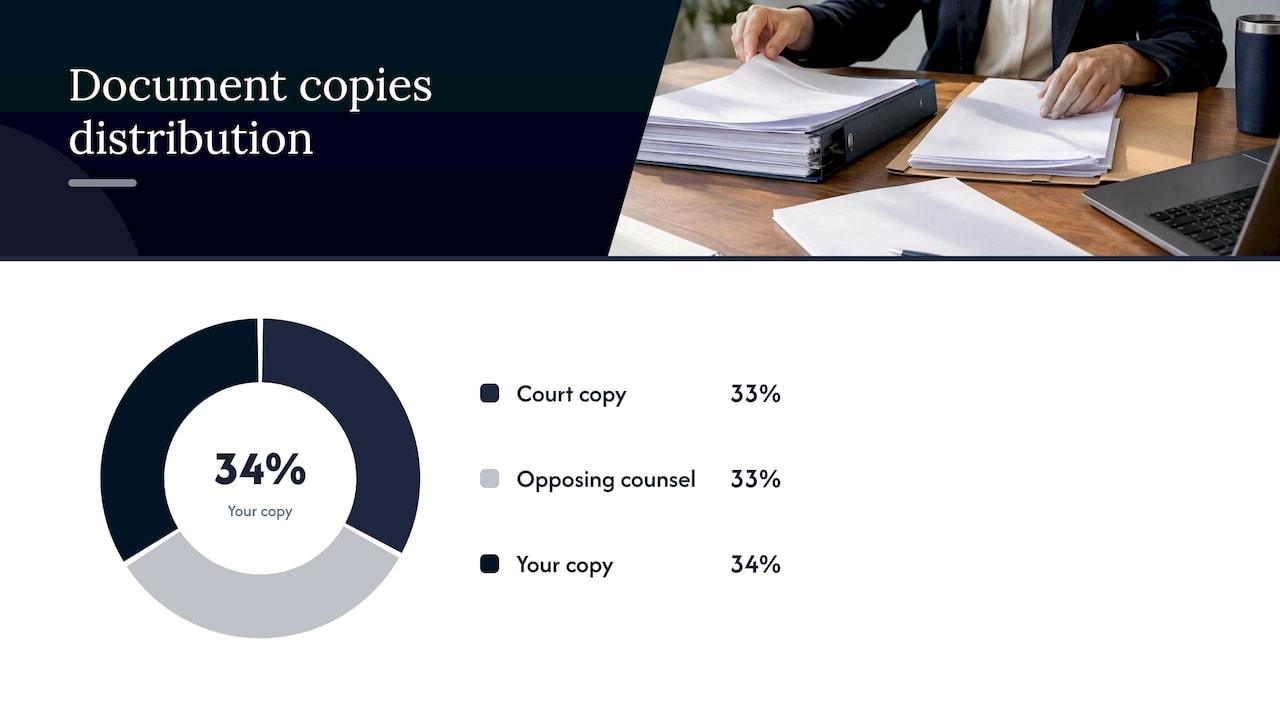
- Make at least three copies of every document: one for the court, one for opposing counsel, and one for your own reference at the podium.
- Mark each exhibit clearly before the hearing and file proof of service for any subpoenas you issued.
- If a witness is reluctant to appear voluntarily, have your attorney issue a subpoena well ahead of the hearing date rather than waiting until the last week.
Although domestic violence hearings are not bound by strict rules of evidence the way a criminal trial is, treating your preparation with that same rigor pays off. Authenticate medical records properly, preserve a clear chain of custody for photographs, and prep witnesses so their testimony holds up under cross-examination.
Pro Tip: Bring your exhibits in a labeled binder rather than a loose folder. Judges move fast through hearing dockets, and fumbling for a document costs you credibility you cannot get back.
For a full breakdown of what to bring and how to organize it, our hearing preparation checklist covers the specifics county clerks expect to see.
Defenses and Tactics NH Attorneys Use in These Hearings
Not every restraining order case turns on who is telling the truth about the underlying incident. Some of the strongest defenses are procedural and never require a judge to weigh competing stories at all.
- Improper service: if you were never properly served with the petition, the order may be vulnerable to dismissal on that basis alone.
- Lack of jurisdiction or venue: cases filed in the wrong court or county can be challenged before the merits are even reached.
- Insufficient notice: short notice that denies you a realistic opportunity to prepare can support a request for a continuance.
Substantive defenses go to the heart of the allegations. Courts under RSA 173-B now weigh patterns of coercive control alongside isolated incidents, so an effective defense addresses the full relationship history rather than just the specific event described in the petition. Common substantive arguments include a lack of credible threat, insufficient proof of abuse under the statutory standard, evidence that the petitioner was the predominant aggressor, or testimony that contradicts the petition’s timeline.
Tactically, an experienced attorney rarely treats a hearing as all-or-nothing. Negotiating narrower order language, proposing supervised visitation instead of a full custody freeze, or requesting a short continuance to secure a key witness can all produce a better outcome than fighting the entire petition head-on. Challenging the admissibility of a weak exhibit, such as a screenshot with no clear authentication, can also undercut the petitioner’s case without requiring you to disprove every allegation.
Pro Tip: If you genuinely own or lease the residence in question, bring your lease, mortgage statement, or payment records to the hearing. That documentation is often the deciding factor in whether an occupancy order against you holds up.
From Service to Final Hearing: What the NH Timeline Looks Like
Once you are served, the clock starts moving on a predictable but tight schedule.
- Temporary order takes effect immediately upon service, often issued ex parte before you had any chance to respond.
- Hearing scheduling follows RSA 173-B:3, which requires a hearing within 30 days of filing or within 10 days of service, whichever is later, with limited extensions allowed for good cause.
- You can request an earlier hearing using the Request for Hearing on Temporary Orders form if you want your case heard sooner than the default schedule allows.
- At the hearing, the petitioner carries the burden of proving abuse by a preponderance of the evidence, and you have the right to testify, cross-examine, and present your own witnesses and exhibits.
- The judge issues a ruling, either dismissing the petition, entering a final order, or in rare cases converting it to a mutual order if both sides filed and both met the statutory standard.
- After the order, you retain options: filing a motion to modify, responding to a renewal petition before it expires, or addressing a contempt allegation if the other side claims you violated terms.
If the initial order was entered without you present, our guide to ex parte orders in New Hampshire explains exactly what rights you still have before the final hearing.
What Defending a Restraining Order Actually Costs in NH
Legal fees for restraining order defense vary widely depending on how contested the case is and how many hearings it takes to resolve. Attorneys generally bill one of three ways: a flat fee covering representation through the final hearing, hourly billing for cases that stretch across multiple sessions, or a retainer that gets drawn down as work is performed.
- Flat fees tend to apply to straightforward single-hearing cases where the facts are not heavily disputed.
- Hourly billing becomes more common once a case involves multiple continuances, expert witnesses, or parallel criminal charges.
- Retainers give you a working budget upfront, with remaining funds refunded if the case resolves faster than expected.
Court and administrative costs add to the total. The Judicial Branch self-help guide notes that sheriff service fees vary by county, and fee-waiver options exist for qualifying Superior Court filings if you cannot afford the standard filing costs. Subpoena fees and any expert witness costs, such as a forensic document reviewer, are additional and tend to scale with how complex the evidence picture becomes.
Costs climb fastest when a case involves concurrent criminal charges, multiple hearing dates, or expert testimony on contested evidence like digital records. You can manage the total spend through limited-scope representation focused on the critical pretrial motions, rather than paying for full-service representation on every procedural step, though that approach works best in cases without a parallel criminal exposure.
Choosing and Working With a Restraining Order Defense Attorney
The consultation is where you figure out whether an attorney is the right fit before you commit to a fee arrangement. A handful of direct questions tend to reveal more than a polished sales pitch.
- Ask how much of their caseload involves RSA 173-B hearings specifically, not general family law.
- Ask whether they have actually tried contested restraining order hearings to a final ruling, not just negotiated settlements.
- Ask how the fee structure works and what triggers additional charges beyond the initial quote.
- Ask how quickly they respond to calls or messages once a hearing date is set.
Bring your service packet, any messages between you and the petitioner, and a written list of potential witnesses to that first meeting so counsel can assess the case accurately from day one. Be wary of any attorney who promises a guaranteed dismissal before reviewing your evidence, or one who cannot clearly explain their hearing strategy in plain terms. A credible plan should name specific steps: which witnesses to subpoena, which exhibits to challenge, and what outcome is realistic given the facts you have described.
How Granite Criminal Defense Prepares Restraining Order Cases
We built our practice around criminal defense exclusively, which means every restraining order case we take on gets the same trial-ready preparation we bring to a criminal docket. Our team includes former prosecutors who understand how the state builds these cases from the inside, and we offer bilingual Spanish-speaking representation for clients who need it.
- We run an independent investigation rather than relying only on what the petition alleges.
- We review every piece of evidence, from text threads to police reports, before deciding on hearing strategy.
- We prepare witnesses for live testimony, since affidavits alone rarely carry weight at a final hearing.
- We give clients direct access to their attorney from the first phone call, not a rotating intake staff.
Our workflow starts with immediate intake and evidence preservation, moves into witness preparation, and builds toward a hearing strategy that treats your case as if it were going to trial, because that posture gives us the most leverage regardless of how the hearing actually unfolds.
Inside the Hearing: Roles of the Petitioner and Respondent
At a final hearing, the petitioner speaks first and carries the burden of proving abuse occurred under the statutory standard. They typically testify about the incidents described in the petition, introduce supporting exhibits, and may call witnesses who observed the events firsthand.
As the respondent, you have the right to hear all of that testimony, cross-examine the petitioner and any witnesses, and then present your own case. That includes your own testimony, your witnesses, and any documentary evidence you have prepared. The judge functions as both fact-finder and decision-maker since these hearings do not involve juries.
Judicial Branch protocols describe this as a genuine opportunity to be heard, not a formality before an order is rubber-stamped. Judges weigh credibility heavily, which is part of why live testimony from both sides matters more than written statements submitted in advance.
After both sides present their case, the judge rules from the bench in many instances, though some cases are taken under advisement for a written decision. A finding of abuse by a preponderance of the evidence, a lower bar than the criminal standard, is enough to support a final order, which is one reason these hearings deserve the same preparation as a criminal trial even though the label is civil.
Custody and Visitation Consequences of a Restraining Order
A restraining order rarely stays contained to the immediate dispute when children are involved. Under RSA 173-B:5, a judge can set temporary custody and parenting-time terms as part of the same order, sometimes suspending your visitation entirely or requiring it to be supervised.
These terms frequently outlast the underlying dispute. A protective order entered during a contentious separation can become a reference point in a later divorce or custody proceeding, since family court judges are required to consider any history of domestic violence findings when setting permanent parenting plans.
Fighting the restraining order itself is often the most direct way to protect your parenting rights, because a dismissed or narrowed order removes the factual predicate a family court would otherwise rely on. Even when a full dismissal is not realistic, negotiating supervised visitation instead of a complete suspension preserves a relationship with your children while the broader case plays out. Waiting until a later custody hearing to contest the underlying allegations is almost always a weaker position than addressing them head-on at the restraining order stage.
Author Perspective: What Actually Changes the Outcome
The respondents who do best are the ones who stop contact immediately, preserve every message and document before memories fade or phones get replaced, and bring in counsel before the first hearing rather than after a bad result. Attending every scheduled hearing matters more than people expect: a missed date can mean a default order with no chance to tell your side. I have seen informal fixes, a phone call to “clear the air” or a mutual friend relaying messages, backfire into new violation allegations more often than they resolve anything. Early evidence work and witness preparation are what actually shift outcomes, not last-minute arguments at the courthouse door.
— Walter Ramos
Get Help Defending a Restraining Order in New Hampshire
If you have been served with a restraining order petition in New Hampshire, we handle domestic violence defense, restraining order hearings, and the court representation that goes with them. A consultation with our team covers the specifics of your service packet, any messages or records you have preserved, and the names of witnesses who can speak to what actually happened.
- Bring your hearing paperwork and any temporary order already entered against you.
- Bring copies of relevant texts, emails, or messages exchanged with the petitioner.
- Bring a list of potential witnesses and their contact information.
We offer direct attorney access from your first call and can provide bilingual representation when needed. Visit our domestic violence defense page to schedule a consultation before your next court date.
This article is general information, not a substitute for advice from a qualified lawyer. Consult a qualified legal professional about your own circumstances before acting on anything here.
FAQ
How can you defend yourself against someone who lies to get a restraining order against you?
Focus on contradicting the specific claims with concrete evidence: text messages, call logs, witness testimony, and any records that undercut the timeline in the petition. Live witness testimony carries more weight than written statements, so identify anyone who can speak directly to what happened and have your attorney prepare them to testify in person.
Why would a judge dismiss a restraining order?
A judge can dismiss a petition when the petitioner fails to meet the burden of proving abuse by a preponderance of the evidence, or when procedural defects exist, such as improper service or lack of jurisdiction. Dismissal can also follow when cross-examination reveals inconsistencies that undermine the petitioner’s credibility.
What happens if you violate a restraining order in NH?
Violating a protective order issued under RSA 173-B is a class A misdemeanor, and police can arrest you based on probable cause alone without a separate warning. A second violation within six years can bring enhanced penalties beyond the standard misdemeanor exposure.
What proof do you need for a restraining order in NH?
A petitioner needs to show abuse by a preponderance of the evidence, a lower standard than criminal cases require, through testimony, documents, or other evidence presented at the final hearing. As the respondent, the same hearing gives you the right to introduce your own evidence and challenge whatever the petitioner presents.
Recommended
- Prepare for NH Restraining Order Hearing: RSA 173-B, Bring 3 Copies
- What to Know About Restraining Orders in New Hampshire
- Ex Parte Order NH: A Guide for New Hampshire Parents
- The NH Court System Explained: Where Your Case Actually Goes
This article is general information about New Hampshire criminal law, not legal advice, and does not create an attorney-client relationship with Granite Criminal Defense. Laws and court procedures change and every case is different. If you have been charged anywhere in Rockingham, Strafford, Hillsborough, Merrimack, Belknap or Carroll County, call us.
