

A New Hampshire restraining order hearing under RSA 173-B typically results in one of two paths: a temporary order issued the same day you file, followed by a final hearing scheduled within the statutory deadline, or a final hearing where both sides testify before a judge decides. There’s no filing fee, and you can represent yourself or hire an attorney. The judge weighs testimony and evidence against a preponderance standard before granting, denying, or modifying protection.
TL;DR:
- The final hearing must occur within the statute-specified period after filing or service, with possible extensions granted for good cause.
- Evidence such as police reports, photographs, messages, and witness testimony is most persuasive when presented clearly and organized in multiple copies.
- An ex parte order is issued the same day with no fee and requires immediate safety measures, but can be challenged or dismissed if criteria are not met.
- Violations of protective orders are enforced as criminal charges and require immediate police action, with the order entered into national databases for broad enforcement.
- Both parties can seek modifications or extensions before the order expires, but procedural accuracy and legal counsel significantly improve the chances of success.
Table of Contents
- What Is a Final Restraining Order Hearing in NH?
- How Long Until Your Hearing Is Scheduled?
- What Is a Temporary (Ex Parte) Order and When Does It Apply?
- What Evidence Actually Persuades a Judge?
- How Should a Plaintiff Prepare for the Hearing?
- How Should a Defendant Prepare a Response?
- What Can the Judge Order, and What Happens If It’s Violated?
- What Happens in the Courtroom After the Ruling?
- Can You Modify, Extend, or Appeal an Order?
- What Our Courtroom Experience Says About These Hearings
- Get Help With a Restraining Order Case in New Hampshire
- Where to Verify NH Restraining Order Procedures
- A Final Word on Preparation and Safety
- Sources
- FAQ
What Is a Final Restraining Order Hearing in NH?
A final hearing is where a district or circuit court judge decides whether to grant a protective order that can last up to a year. This is different from the ex parte order you may have received when you first filed, which is temporary and issued without the other party present.
Both the plaintiff (the person seeking protection) and the defendant (the person accused) have the right to appear, testify, and challenge each other’s evidence. The judge isn’t looking for proof beyond a reasonable doubt, the criminal standard. Instead, New Hampshire Judicial Branch guidance confirms the court applies a civil standard: does the evidence show it’s more likely than not that abuse occurred and that ongoing protection is warranted.
The sequence in the courtroom usually runs in this order:
- The clerk calls the case and confirms both parties are present or notes who is absent.
- The plaintiff presents testimony first, often walking through a timeline of incidents.
- The plaintiff introduces supporting evidence: photos, messages, police reports, or witness statements.
- The defendant cross-examines the plaintiff and can call witnesses or testify in their own defense.
- The judge asks clarifying questions and may request additional documentation.
- The judge rules from the bench or takes the matter under advisement for a written decision.
Judges in New Hampshire generally focus on three things when deciding: the relationship between the parties, whether the conduct meets the statute’s definition of abuse, and whether there’s a credible ongoing threat to safety. Attorneys can appear on behalf of either side, but plenty of people go through this process without one, particularly at the ex parte stage.
How Long Until Your Hearing Is Scheduled?
New Hampshire law sets firm outer limits on how fast a final hearing must happen, though the exact date depends on when the defendant is served.
- The court must generally schedule the final hearing within the statutorily established period after you file the petition.
- If service on the defendant happens later after filing, the hearing must occur within a set number of days after service, whichever deadline is later.
- A judge can grant a one-time extension of additional days for good cause, such as a process server unable to locate the defendant.
- Hearings sometimes move faster when a judge sees an immediate safety risk, or slower when a defendant requests a continuance or a judge recuses.
These deadlines come directly from RSA 173-B:3, and courts are required to reschedule promptly rather than dismiss a petition over administrative delays like court closures. If you have urgent safety concerns while waiting, tell the clerk’s office immediately. Courts can sometimes accommodate expedited attention when there’s a documented escalation in threat level.
What Is a Temporary (Ex Parte) Order and When Does It Apply?
An ex parte order is emergency relief a judge can grant the same day you file, before the other party even knows the case exists. “Ex parte” means only one side has been heard. Judges issue these when the petition shows an immediate and present danger of abuse, not just a general grievance.
After a judge reviews an ex parte request, three outcomes are possible:
- The judge grants a temporary order and schedules a final hearing, usually within the statutory window described above.
- The judge declines the temporary order but still schedules a final hearing so both sides can be heard.
- The judge finds the petition doesn’t meet the legal threshold and dismisses it outright.
There’s no fee for filing or for service of process on stalking or domestic violence petitions, a detail many people don’t realize until they’re standing at the clerk’s counter worried about cost. Once a temporary order issues, law enforcement typically serves the defendant with copies of both the order and the notice of hearing.
Pro Tip: Keep a physical and digital copy of your temporary order with you at all times after it’s issued. Screenshot it, print it, and give a copy to a trusted contact. If the defendant violates it, having the order accessible speeds up how quickly police can act.
If you’ve just received an ex parte order, take a few immediate steps: change locks if the defendant has access to your home, notify your workplace or your child’s school if relevant, and save every text, email, or call from the defendant even if the content seems minor. Those records matter later.
What Evidence Actually Persuades a Judge?
New Hampshire courts apply the preponderance of the evidence standard at final hearings, meaning the plaintiff must show it’s more likely than not that the alleged abuse happened. That’s a lower bar than criminal court, but it still requires more than a bare accusation.
According to 603 Legal Aid’s guidance on testifying, the strongest cases combine direct testimony with corroborating documentation. Evidence that tends to carry weight includes:
- Police reports or incident numbers from prior calls
- Photographs of injuries, property damage, or threatening messages
- Text messages, voicemails, emails, or social media screenshots
- Medical records documenting injuries or related treatment
- Witness testimony from people who saw or heard the conduct directly
- A pattern of prior incidents, not just a single isolated event
New Hampshire district and circuit courts don’t apply the strict evidentiary rules you’d see in a jury trial. Judges have more discretion to admit hearsay or informal documentation if they find it relevant and credible, though a well-organized presentation still matters more than most people expect.
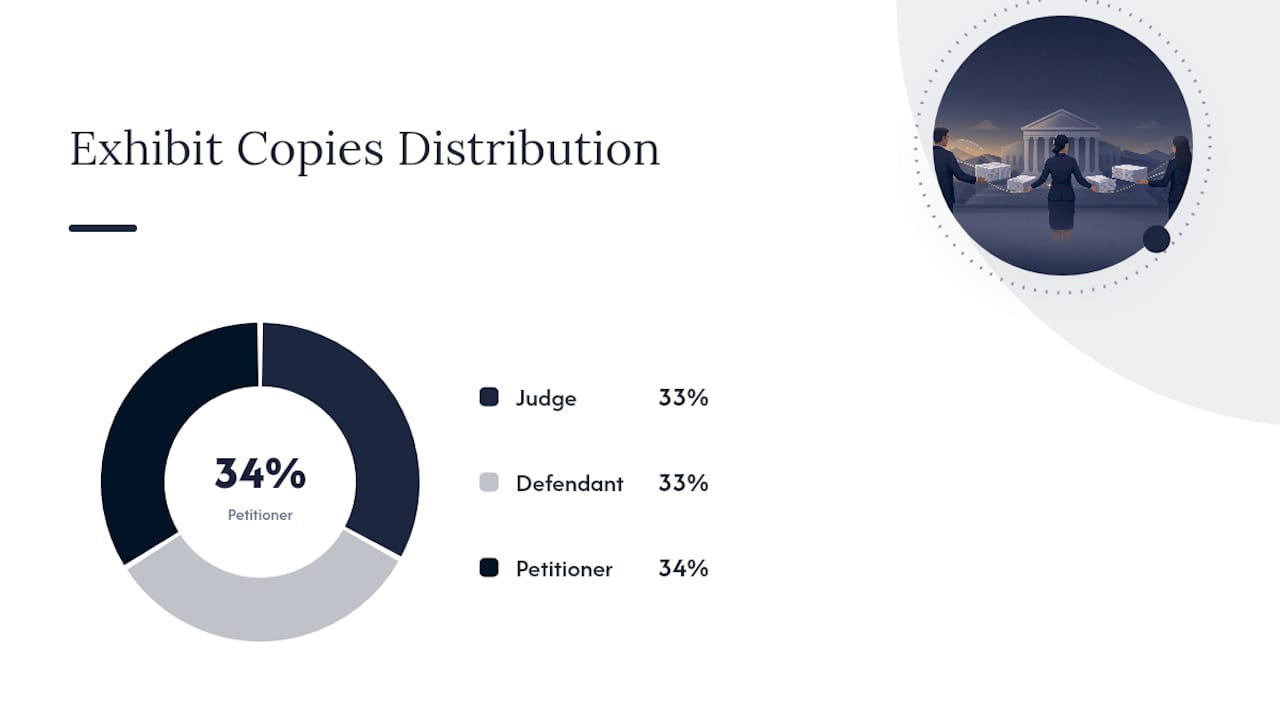
One detail that trips up first-time petitioners: bring three copies of every document, one for the judge, one for the defendant, and one for yourself. Courts don’t make copies for you, and showing up with a single printout of a critical text thread can stall your own hearing. Organize exhibits in the order you plan to reference them, and number them so you can point the judge to “Exhibit 3” instead of shuffling through a folder mid-testimony.
How Should a Plaintiff Prepare for the Hearing?
Preparation is where most cases are actually won or lost, not in the courtroom itself. Here’s the order to work through in the days before your hearing:
- Contact the clerk’s office to confirm your hearing date and ask about safety accommodations, including telephone participation if you’re uncomfortable being in the same room as the defendant.
- Assemble your documents: police reports, photos, messages, and medical records, organized chronologically.
- Make three copies of every exhibit, labeled and numbered for quick reference.
- Identify witnesses who observed the conduct directly and confirm they can attend or submit a statement.
- Brief your witnesses on what to expect. Courtroom testimony is nerve wracking, and witnesses who know the format in advance perform better under cross-examination.
- If you need an interpreter or have an accessibility need, request accommodations through the clerk well before your hearing date, not the morning of.
Judicial Branch guidance also recommends coordinating with local law enforcement beforehand if you have ongoing safety concerns, particularly around how you’ll leave the courthouse after the hearing.
Pro Tip: Write out a short, chronological narrative of what happened before you testify, even if you don’t read it word for word in court. Judges respond better to a clear timeline than to a scattered recollection triggered by nervous energy on the stand.
How Should a Defendant Prepare a Response?
If you’ve been served with a restraining order petition, you have the right to notice of the hearing and the right to be heard, the same as the plaintiff. Filing a timely answer and showing up matters enormously, because a default judgment against an absent defendant is a real risk.
A few things worth doing before your hearing:
- Gather any evidence that contradicts the plaintiff’s account: messages, call logs, location records, or witnesses who can speak to your actual conduct.
- Avoid contacting the plaintiff directly to “sort things out” or gather your own evidence. If a temporary order is already in place, that contact can itself become a new violation.
- If you genuinely need more time to prepare, file a motion for a continuance and show good cause. Courts can grant these, but waiting until the morning of your hearing to ask rarely works in your favor.
- Consider whether the allegations touch on conduct that could also expose you to separate criminal charges, since anything you say in a civil hearing can potentially surface elsewhere.
This is often the point where hiring an attorney experienced in domestic violence defense makes a real difference, especially for cross-examining the plaintiff, framing what does and doesn’t meet the statute’s definition of a credible threat, and making sure nothing said during testimony creates exposure in a parallel criminal matter.
What Can the Judge Order, and What Happens If It’s Violated?
If the judge finds the plaintiff met the burden of proof, a final protective order can include a wide range of relief. The Domestic Violence Protocols outline what’s available, and it goes well beyond a simple no-contact instruction.
- No-contact provisions covering calls, texts, social media, and third-party messages
- Stay-away orders covering the plaintiff’s home, workplace, or children’s school
- Temporary custody or visitation arrangements for shared children
- Financial or support provisions in some cases
- Firearms relinquishment, along with notification requirements to law enforcement
- Possible attorney’s fees awarded within statutory limits
A final order can last up to a year. Extensions and renewals are possible if the plaintiff files a motion with proper notice and hearing opportunity, and courts may grant longer renewals when continued risk is shown.
One detail that surprises a lot of defendants: New Hampshire protective orders get entered into the National Crime Information Center database, meaning the order is enforceable in any state, not just New Hampshire. A willful violation isn’t a civil matter anymore at that point. It becomes a separate criminal charge, on top of possible contempt proceedings in the original case.
New Hampshire judicial protocols also specifically caution against issuing mutual protective orders. Cross-orders where each party has protection against the other require a separate petition and independent findings, not a blanket “both of you stay away from each other” resolution.
What Happens in the Courtroom After the Ruling?
Court staff manage the exit from the courtroom carefully, and the specifics matter if you’re the plaintiff. Standard safety procedure has plaintiffs wait at the clerk’s counter while court staff make sure the defendant leaves the building first, reducing the odds of a confrontation in the parking lot or hallway.

If the defendant wasn’t present for the final hearing, the order still takes effect, and the court arranges service, either by mail or through local law enforcement, so the defendant is formally notified.
If a violation happens after the order is in place, take these steps:
- Call local police immediately rather than waiting to see if it happens again.
- Provide the responding officer with a copy of the order if you have it accessible.
- File a police report even for a seemingly minor violation, since a documented pattern strengthens any future contempt or criminal case.
- Consult the clerk’s office about filing a petition for contempt if law enforcement doesn’t pursue criminal charges.
Violations get treated seriously by design. The whole point of the NCIC entry and the criminal violation provisions is to make the order mean something beyond a piece of paper.
Can You Modify, Extend, or Appeal an Order?
A final order lasting up to a year isn’t necessarily the end of the story for either party. Both plaintiffs and defendants have limited but real options afterward.
- To extend an order before it expires, the plaintiff files a motion with the court and the defendant must receive notice and an opportunity to be heard at a hearing, not an automatic renewal.
- Either party can move to modify or vacate an order if circumstances have genuinely changed, though the court will want to see specifics, not just a general request.
- Courts retain discretion to grant longer renewal periods in cases showing a continued pattern of risk.
- Appeal rights exist but are narrow. New Hampshire’s appellate process generally reviews questions of law, not the judge’s factual findings from the hearing itself.
- If you’re considering a motion to modify, vacate, or appeal, this is a point where consulting an attorney pays off, since procedural missteps at this stage are hard to undo.
What Our Courtroom Experience Says About These Hearings
Cases in front of a judge rarely turn on the underlying facts alone. They turn on preparation. The pattern we see repeatedly involves petitioners or defendants showing up with strong underlying evidence and undermining it through simple logistics: no copies for the court, disorganized exhibits, or a witness who wasn’t briefed on how cross-examination actually works.
A short exhibit list and a demonstrative timeline do more to help a judge follow your testimony than any amount of raw emotion on the stand. On the defense side, the single most damaging thing we see is a defendant who contacts the plaintiff after a temporary order issues, even with good intentions, thinking it will “clear things up.” It almost never does, and it can create a fresh violation on top of the original petition.
Where legal counsel earns its keep is in cross-examination technique, in correctly framing what does and doesn’t legally qualify as a credible threat under the statute, and in follow-up after the hearing, whether that means responding to a violation or preparing a modification motion months later.
— Walter
Get Help With a Restraining Order Case in New Hampshire
Some criminal defense attorneys handle restraining order matters with an approach informed by experience as former prosecutors, meaning cases get prepared with an understanding of how the state builds and argues these cases. Whether you’re a plaintiff trying to present a credible-threat case clearly or a defendant facing allegations that could also carry criminal exposure, direct attorney access from your first call can be important. Bilingual English and Spanish attorney representation can help ensure language is not a barrier to understanding your rights at a hearing that can affect where you live, whether you see your children, and whether you can legally own a firearm.
An initial consult typically covers the specifics of your petition or the allegations against you, what evidence you may need, and whether a continuance or modification makes sense given your timeline. If you’re facing a hearing on the calendar in New Hampshire, visit Granite Criminal Defense to schedule a consultation before your court date arrives.
Where to Verify NH Restraining Order Procedures
For the statutory language itself and official court procedures, go straight to the primary sources rather than relying on secondhand summaries.
- RSA 173-B for the statute governing protective order petitions, hearing deadlines, and fee waivers.
- New Hampshire Judicial Branch self-help pages for forms, video explainers, and county-specific filing steps.
- Domestic Violence Protocols for detailed courtroom procedure and relief options judges can order.
- 603 Legal Aid for free guidance on testifying and referrals if you can’t afford an attorney.
- The National Domestic Violence Hotline for 24/7 confidential support if you’re in immediate danger.
- NH Coalition Against Domestic and Sexual Violence for local support programs and safety planning resources.
Your county clerk’s office remains the best resource for the specific forms and filing steps that apply in your district.
A Final Word on Preparation and Safety
Procedure matters here, but so does judgment about what to prioritize. Reading the statute helps you understand your deadlines and rights, but the outcome in front of a judge usually comes down to whether you showed up organized, told a clear story, and treated the courtroom’s safety procedures as seriously as the law does. If your situation involves any ongoing danger, lean on the clerk’s office, local law enforcement, or a domestic violence hotline before you lean on paperwork. And if the allegations against you carry criminal exposure alongside the civil petition, don’t try to navigate that overlap alone. Get a lawyer on the phone before your hearing date, not after.
This article is general information, not a substitute for advice from a qualified lawyer. Consult a qualified legal professional about your own circumstances before acting on anything here.
Sources
- RSA 173-B:3 Commencement of Proceedings; Hearing
- Orders of Protection and Restraining Orders | New Hampshire Judicial Branch
- Domestic Violence Protocols | New Hampshire Judicial Branch
- Testifying at the Final Hearing | 603 Legal Aid
FAQ
What Proof Do You Need for a Restraining Order in NH?
You need evidence showing it’s more likely than not that abuse occurred, which can include police reports, photos, messages, medical records, or witness testimony that corroborates your account under the preponderance of the evidence standard.
What Is the Best Way to Win a Restraining Order Case?
Organize your evidence chronologically, bring three copies of every document, prepare any witnesses in advance, and present a clear, direct timeline of events rather than a scattered recollection on the stand.
How Do You Fight a Restraining Order in New Hampshire?
File a timely answer, show up for the hearing, gather evidence that contradicts the allegations, avoid contacting the plaintiff, and consider consulting a domestic violence defense attorney if criminal exposure is possible.
How Long Does a Restraining Order Last in NH?
A final protective order can last up to one year, and the plaintiff can request an extension before it expires if the court finds continued protection is warranted.
Is There a Fee to File for a Restraining Order in NH?
No. RSA 173-B waives filing fees and service fees for domestic violence and stalking petitions, and you can proceed with or without an attorney.
