
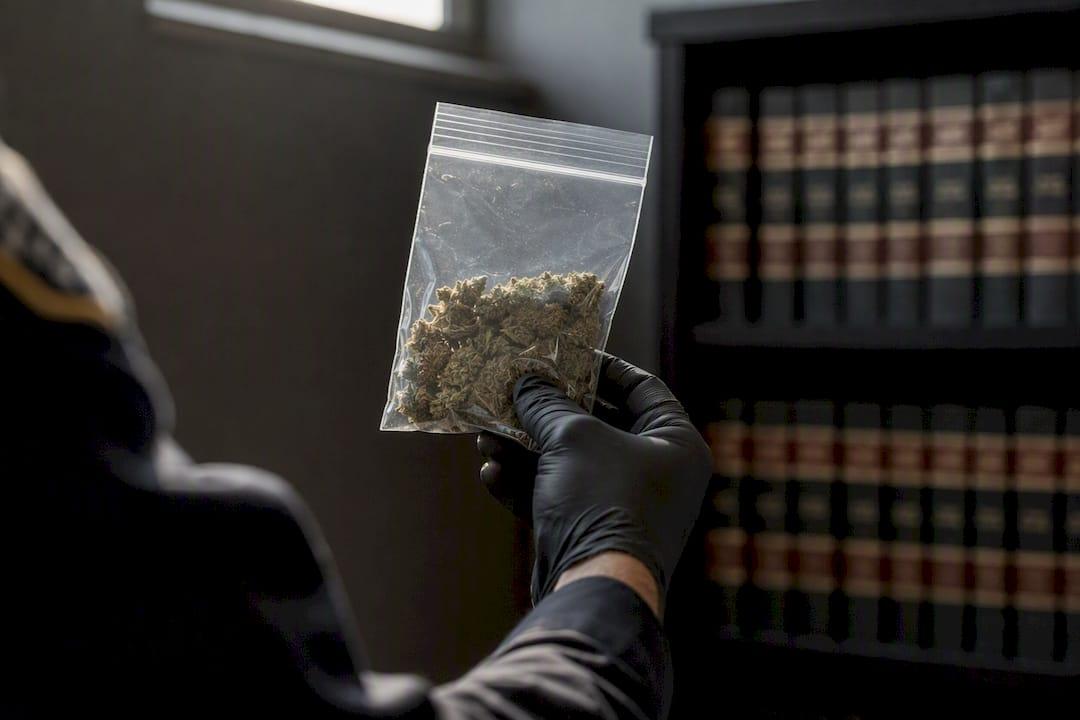
Recreational marijuana remains illegal to buy and sell in New Hampshire in 2026, even after the House passed a legalization bill and lawmakers fought over medical program expansion all year. Possessing three-quarters of an ounce or less stays a civil fine, not a crime, but transporting cannabis in your car the wrong way can still turn into a criminal charge. If you’re cited, arrested, or unsure where a new rule leaves you, talk to a New Hampshire criminal defense attorney before you say anything else to police.
TL;DR:
- Possessing three-quarters of an ounce or less results in a civil fine, but transporting cannabis improperly during a traffic stop can lead to criminal charges.
- Bills supporting recreational legalization or cultivation expansion failed in the Senate, leaving the current prohibition unchanged for 2026.
- Medical cannabis patients must register and purchase only from licensed centers, with higher costs due to limited production and no home cultivation allowance.
- Transport rules specify storing cannabis in the trunk or a compartment inaccessible while driving, and legal cross-border recreational purchases do not exist.
- Cannabis remains illegal federally, impacting employment, firearm possession, and activities on federal land despite state civil decriminalization.
Table of Contents
- Is Weed Legal in NH in 2026? Civil vs. Criminal Rules
- Which 2026 Marijuana Bills Actually Passed or Failed?
- Therapeutic Cannabis Program: Patient Rules in 2026
- Cannabis DUI and Transport Rules That Catch Residents Off Guard
- What to Do If You’re Stopped, Cited, or Arrested
- What Comes Next for New Hampshire Cannabis Policy
- Where Can You Legally Use Marijuana in New Hampshire?
- Does Marijuana Use Affect Your Job in New Hampshire?
- How Do You Buy Marijuana Legally in New Hampshire?
- Age Restrictions and Penalties for Underage Possession
- How Much Marijuana Can You Legally Possess in New Hampshire?
- Federal Law vs. New Hampshire Law: What’s Different
- What Granite Criminal Defense Sees in Marijuana Cases
- Facing a Marijuana Charge in New Hampshire? Talk to Granite Criminal Defense First
- Where to Verify Current New Hampshire Cannabis Law
- Sources
- FAQ
Is Weed Legal in NH in 2026? Civil vs. Criminal Rules
No. New Hampshire has not legalized recreational sales, and nothing on the books lets a dispensary sell cannabis to adults for non-medical use. What’s changed since 2017 is how the state treats small amounts of personal possession, and that distinction trips up a lot of residents who assume “decriminalized” means “legal.”
Here’s the actual breakdown under current New Hampshire law:
- Possession of ¾ ounce or less is a civil violation under HB 640, punishable by a fine, not a criminal record.
- Possession above that threshold escalates to misdemeanor or felony charges depending on the amount.
- Cultivation and sale of any amount remain felonies under RSA 318-B:26, with penalties that scale sharply based on quantity and intent to distribute.
- A second or third civil possession violation within three years carries steeper fines and can trigger a required drug education program.
One nuance residents keep getting wrong in 2026: the federal government moving cannabis from Schedule I to Schedule III does not touch New Hampshire’s criminal statutes. State law controls what happens if you’re arrested here, and NH lawmakers have said directly that federal rescheduling helps medical cannabis businesses financially but changes nothing about state-level prosecution for recreational activity.
Which 2026 Marijuana Bills Actually Passed or Failed?
New Hampshire’s legislature spent much of 2025 and 2026 debating cannabis policy, and the results are a mixed bag that left the state exactly where it started on recreational sales. Here’s where each major bill landed:
- HB 186 (recreational legalization and state-run retail model) passed the House, but the Senate Judiciary Committee voted it “inexpedient to legislate”, and the Senate never advanced it. That’s the second consecutive session a House-passed legalization bill has died in the Senate.
- SB 468 would have let Alternative Treatment Centers apply to run greenhouse cultivation sites, aiming to cut production costs and lower prices for medical patients. Governor Kelly Ayotte vetoed it on June 12, 2026, citing public-safety concerns and the difficulty of measuring impairment.
- HB 196, which addressed annulment of past cannabis convictions, and CACR 19, a proposed constitutional amendment on cannabis policy, both stalled without reaching enactment in 2026.
The pattern is political, not popular. A Republican-controlled Senate paired with a governor willing to veto cannabis expansion means bills with House support keep hitting a wall that has nothing to do with public opinion polling.
Therapeutic Cannabis Program: Patient Rules in 2026
New Hampshire’s medical cannabis system runs on RSA 126-X, administered through the Department of Health and Human Services, and it looks nothing like the recreational dispensary model residents see across the border in Maine or Massachusetts. Here’s what qualifying patients need to know:
- Registration is mandatory. Patients need a DHHS-issued registry identification card tied to a qualifying medical condition before they can buy anything.
- Purchases happen only through licensed Alternative Treatment Centers. New Hampshire has five nonprofit ATCs statewide, a supply model the Marijuana Policy Project notes keeps prices higher than in commercialized markets nearby.
- Home cultivation is off the table for most patients. Unlike some medical programs in other states, New Hampshire generally requires patients to buy from an ATC rather than grow their own.
- Visiting patients from other states can participate under specific reciprocity rules, though purchase limits and documentation requirements apply.
- Certifying provider rules expanded recently. Rule changes tied to bills like HB 1278 and SB 357 broadened which types of medical providers can certify patients, effective as part of the DHHS’s October 2025 update to program regulations.
The greenhouse cultivation fight over SB 468 mattered here specifically. Supporters argued lower production costs would finally bring patient prices down, but the veto means the current vertically integrated, higher-cost supply model stays in place for now.
Cannabis DUI and Transport Rules That Catch Residents Off Guard
Two enforcement issues generate more legal trouble for ordinary residents than anything else in New Hampshire’s cannabis framework: how you transport it in a car, and how officers handle suspected impaired driving.
The transport rule is the one people miss most. SB 426, effective January 1, 2025, requires cannabis to be stored in the trunk or in a compartment the driver can’t easily reach while driving, mirroring open-container laws for alcohol. Violating it carries a $150 fine and can lead to license suspension, with harsher consequences for drivers under 21.
- Cannabis loose on a passenger seat or in the glovebox counts as an open-container violation, even if the amount is under the decriminalized threshold.
- Buying cannabis legally in Massachusetts or Maine does not make it legal to transport into New Hampshire the way you’d casually assume.
- A civil possession violation can turn into something more serious if officers find it improperly stored during a traffic stop for an unrelated reason.
New Hampshire also has no per se THC limit for driving under the influence, unlike states that set a specific blood-THC threshold. That means DUI cases here rely entirely on impairment evidence, officer observations, field sobriety performance, and sometimes forensic toxicology, rather than a number on a test.
Pro Tip: Keep any cannabis products in your trunk, in original packaging, every time you drive, even if you’re certain you’re under the legal possession limit. The open-container rule doesn’t care about quantity, only accessibility.
That impairment-based standard actually helps defendants in some ways. Because there’s no bright-line THC number, defense strategy typically centers on challenging roadside procedures and cross-examining an officer’s impairment observations rather than fighting a lab result. If you’re facing a DUI charge involving cannabis, that distinction is worth understanding before you talk to anyone.
What to Do If You’re Stopped, Cited, or Arrested
The decisions you make in the first hour after a cannabis-related stop or arrest often shape the entire case. Here’s the sequence that protects you:
- Identify yourself, then stop talking. You have to provide identification, but you don’t have to explain, justify, or discuss anything about what officers found.
- Ask for an attorney immediately and repeat the request if it’s ignored. Don’t try to negotiate or explain your way out of a stop.
- Preserve everything. Hold onto packaging, receipts, and any documentation showing the amount and source of what was found, particularly if you’re a Therapeutic Cannabis Program patient.
- Write down witness names and contact information while memories are fresh, including anyone in the car or nearby.
- Call a defense attorney before your court date, not the week before. Early involvement lets counsel review the stop itself, the search, and the charging decision while evidence is still fresh.
Outcomes vary widely depending on the charge. A civil possession violation usually just means a fine. A misdemeanor or felony charge opens up options including motions to suppress evidence, negotiated pleas, or trial, and in some cases a path toward record annulment once the case resolves. Representation early in the process changes which of those doors stay open.
What Comes Next for New Hampshire Cannabis Policy
Don’t expect quick movement. Overriding a governor’s veto requires two thirds majorities in both the House and Senate, a bar SB 468 didn’t clear in 2026. A constitutional amendment route like CACR 19 needs the same two thirds threshold in the legislature before it even reaches voters.
- New Hampshire has no citizen ballot initiative process, unlike Maine or Massachusetts, so voters can’t force a legalization question onto the ballot directly.
- Any change has to move through the legislature and survive the governor’s desk, or muster a veto override.
- Residents can track bill status through the General Court’s website, submit testimony during committee hearings, or contact their state representatives directly.
- Federal policy shifts, changing legislative composition after elections, and continued public pressure are the most likely accelerants, though none guarantee a different outcome in the next session.
Where Can You Legally Use Marijuana in New Hampshire?
Even for Therapeutic Cannabis Program patients, “legal to possess” doesn’t mean “legal to use anywhere.” New Hampshire has no recreational public consumption allowance at all, and medical use carries its own restrictions.

Smoking or consuming cannabis in any public place remains prohibited statewide, the same way public alcohol consumption is restricted in most New Hampshire municipalities. That includes sidewalks, parks, parking lots, and any space open to the general public, regardless of whether you hold a valid patient registry card.
Landlords and property managers can also prohibit cannabis use on their premises, including in private rental units, since state law doesn’t override a lease agreement’s terms. Renters who assume medical patient status guarantees a right to consume in their apartment are often wrong. Employers control their own worksites entirely, and many maintain zero-tolerance policies regardless of a worker’s registry status.
Vehicles present the clearest line: consuming cannabis in a moving vehicle, or having an open product accessible to the driver, violates the same transport principle behind the open-container rule discussed earlier. Practically speaking, home use on private property you own or control is the only setting with real legal certainty in New Hampshire right now. Everything else carries some risk of a citation, even for registered patients, which makes discretion less a suggestion than a necessity here.
Does Marijuana Use Affect Your Job in New Hampshire?
New Hampshire has no state law barring employers from drug testing for cannabis or from firing an employee over a positive test, even one tied to legal Therapeutic Cannabis Program use. This surprises a lot of patients who assume medical registration comes with workplace protection similar to other prescribed medications.
It doesn’t, in most cases. Unlike some states that have written explicit employment protections into their medical cannabis statutes, New Hampshire’s RSA 126-X does not guarantee TCP patients immunity from adverse employment action based on a drug test. Federal contractors and safety-sensitive positions, commercial drivers, machine operators, healthcare workers, face even less flexibility because federal workplace drug policies still treat cannabis as illegal regardless of state program status.
Private employers generally set their own testing policies, and many New Hampshire companies still maintain pre-employment and random testing programs that don’t distinguish between recreational and medical use. If you’re registered with the Therapeutic Cannabis Program, that status protects you from state criminal prosecution for qualifying use, but it does virtually nothing to shield your job if your employer has a zero-tolerance drug policy. Anyone weighing TCP registration against career risk should treat that gap seriously before assuming legal cannabis use and stable employment are automatically compatible in New Hampshire.
How Do You Buy Marijuana Legally in New Hampshire?
There is exactly one legal path to purchasing cannabis in New Hampshire in 2026: registering with the Therapeutic Cannabis Program and buying from one of the state’s five licensed Alternative Treatment Centers. No recreational dispensaries exist, and none can legally operate under current state law.
Getting there starts with a qualifying medical condition and certification from an approved provider, a list that expanded under recent DHHS rule changes covering additional provider types. Once registered, patients receive a state-issued ID and can purchase within DHHS-set limits at any of the five nonprofit ATCs. Resources like Diamond Wellness’s guide to getting a medical marijuana card in New Hampshire walk through the certification process in more detail for residents considering that route.
Buying from an out-of-state recreational dispensary in Massachusetts or Maine and bringing product back into New Hampshire is not a legal workaround. Doing so means you’re carrying cannabis without registry protection, and if the amount exceeds the decriminalized threshold or gets stored improperly in your vehicle, you’re exposed to exactly the enforcement risks covered earlier. There’s no gray area here worth betting a clean record on. The single door into legal cannabis access in New Hampshire runs through the TCP, full stop.
Age Restrictions and Penalties for Underage Possession
New Hampshire treats underage cannabis possession more harshly than adult civil violations, and the state’s open-container transport rule under SB 426 carries specifically enhanced consequences for drivers under 21.
Anyone under 18 found with cannabis, even amounts that would qualify as a civil violation for an adult, typically faces juvenile court proceedings rather than a simple fine, along with potential involvement from school administration and family court systems depending on the circumstances. Between 18 and 21, individuals are legal adults for possession purposes but face amplified transport penalties: an open-container violation involving a driver under 21 carries steeper license consequences than the same violation for an older driver.
Therapeutic Cannabis Program registration is not available to minors in the way it might be structured in states with pediatric qualifying conditions and guardian oversight, and even where a minor qualifies medically, the surrounding possession and transport rules remain far stricter than for adult patients. Parents facing a situation involving a minor’s cannabis citation should treat it with real urgency, since a juvenile record and its downstream effects on college admissions or future employment carry consequences well beyond the immediate fine. This is an area where the assumption that “it’s just a fine” is most likely to be wrong.
How Much Marijuana Can You Legally Possess in New Hampshire?
The recreational possession ceiling in New Hampshire is three-quarters of an ounce, and that number does the heaviest lifting in the entire statute. Stay under it, and you’re looking at a civil fine. Go over it, even slightly, and you cross into misdemeanor or felony territory depending on the exact amount and any accompanying evidence of intent to distribute.

There is no separate, higher recreational allowance under discussion in current pending legislation. HB 186’s failure in the Senate means the ¾ ounce civil threshold established by HB 640 back in 2017 remains the operative limit going into the rest of 2026, with no legislative path currently positioned to raise it. Therapeutic Cannabis Program patients operate under different, generally higher possession limits set by DHHS regulation, but those limits only apply to registered patients purchasing through licensed ATCs, not to the general public.
Multiple civil violations compound the consequences. A second offense within three years brings a steeper fine and a mandatory drug education program, and a third turns into more serious territory. None of these thresholds have shifted with the 2026 legislative session, despite the volume of bills introduced. If you’re unsure whether an amount you’re carrying falls under or over the line, that uncertainty alone is reason enough to handle it with caution rather than assumption.
Federal Law vs. New Hampshire Law: What’s Different
Federal law still classifies cannabis as a controlled substance, and that mismatch with New Hampshire’s civil decriminalization creates real, practical consequences beyond just criminal exposure.
Cannabis remains illegal under the federal Controlled Substances Act regardless of any state-level decriminalization, and moving it from Schedule I to Schedule III, a shift lawmakers discussed throughout 2026, changes the regulatory and tax treatment of licensed cannabis businesses without touching personal possession or recreational sale prohibitions. That distinction matters enormously for anyone assuming rescheduling equals legalization; it doesn’t.
The practical friction shows up in specific ways for New Hampshire residents. Federal employees, military service members, and anyone holding a federal security clearance face zero tolerance regardless of state civil violation status. Gun ownership intersects here too: federal law prohibits firearm possession by anyone who uses a controlled substance, and cannabis still qualifies federally even where state law treats possession as a civil matter. Crossing into federal land, national parks, VA facilities, federal buildings, with cannabis that’s legal to possess under New Hampshire’s civil threshold still constitutes a federal offense. The gap between “legal enough for a state fine” and “actually federally compliant” is wider than most residents realize, and it’s worth factoring in before assuming state-level decriminalization covers every situation you might encounter.
What Granite Criminal Defense Sees in Marijuana Cases
Over three decades in New Hampshire courtrooms, patterns emerge. Cannabis charges rarely start as cannabis cases. They start as traffic stops, transport violations, or a search that expanded beyond its original scope, and the strongest defenses come from picking apart how officers got to the charge in the first place.
Independent evidence review changes outcomes more than people expect: challenging the stop itself, the search authority, or an impairment claim built on shaky field sobriety observations. If you’re facing a cannabis-related charge, contact Granite Criminal Defense early, and bring whatever documentation you have, citation paperwork, TCP registry status, or witness contacts, to that first conversation.
— Rich
Facing a Marijuana Charge in New Hampshire? Talk to Granite Criminal Defense First
New Hampshire’s cannabis laws are a patchwork of civil fines, felony exposure, and federal contradictions, and most people don’t find out which category they’ve landed in until they’re already standing in front of a judge. Granite Criminal Defense has spent more than 30 years in New Hampshire courtrooms untangling exactly this kind of case, from open-container transport violations to felony cultivation charges, and that courtroom experience shapes how a case gets built from day one. The firm handles DUI defense, misdemeanor and felony drug charges, and criminal record annulment for clients whose cannabis convictions are still following them years later. If you’ve been cited, charged, or arrested in connection with marijuana in New Hampshire, reach out to Granite Criminal Defense now for a consultation before you make a statement to anyone else.
Where to Verify Current New Hampshire Cannabis Law
Check the DHHS Therapeutic Cannabis Program page, the SB 468 legislative docket, and CannabisNH’s statute overview for the most current bill status and program rules.
This article is general information, not a substitute for advice from a qualified lawyer. Consult a qualified legal professional about your own circumstances before acting on anything here.
Sources
- NHPR: Marijuana medical cannabis greenhouse cultivation bill vetoed in New Hampshire
- SB468 (2026) bill text and docket
- New Hampshire DHHS — Therapeutic Cannabis Program
- Is weed legal in New Hampshire? Overview — CannabisNH
- Concord Monitor: NH lawmakers doubt federal cannabis policy shift will sway Ayotte but hope for future change
FAQ
Is Recreational Marijuana Legal in NH in 2026?
No. Sales remain illegal statewide, though possession of three-quarters of an ounce or less is a civil violation rather than a crime under HB 640.
What Happened to HB 186 in 2026?
The House passed HB 186, a recreational legalization bill, but the Senate Judiciary Committee rejected it and the Senate never advanced it further.
Why Did the Governor Veto SB 468?
Governor Kelly Ayotte vetoed SB 468 in June 2026, citing public-safety concerns and difficulty measuring driver impairment, blocking greenhouse cultivation expansion for medical ATCs.
Is There a THC Limit for Driving in New Hampshire?
No. New Hampshire has no per se THC limit, so DUI cases rely on impairment evidence like field sobriety performance and officer observations rather than a blood test threshold.
Can I Transport Cannabis Bought in Massachusetts Into New Hampshire?
Doing so risks an open-container violation under SB 426 and possible criminal exposure if the amount exceeds New Hampshire’s decriminalized threshold, regardless of where it was purchased.
What Should I Do If I’m Charged With a Marijuana Offense?
Stay silent beyond identifying yourself, request an attorney immediately, and contact a New Hampshire criminal defense firm like Granite Criminal Defense before your court date.

[…] The 2018 Farm Bill removed hemp, defined as cannabis with 0.3% or less delta 9 THC, from the Controlled Substances Act, which is why CBD derived from hemp is widely sold. Marijuana, meaning cannabis above that THC threshold, remains a federally controlled substance even though most states now permit some form of medical or recreational use. […]