

New Hampshire allows anyone 18 or older who can legally possess a firearm to carry a concealed handgun without a permit or license. This has been true since 2017, when the legislature repealed the old licensing requirement through what was known as SB 12, codified at RSA 159:6. You don’t need to apply, wait, or pay a fee to carry concealed inside New Hampshire’s borders.
That said, “permitless” doesn’t mean “unregulated.” A handful of hard restrictions still apply, and they trip people up more often than you’d expect:
- Prohibited persons still can’t carry, permit or no permit. Felony convictions, active protective orders, and several federal disqualifiers bar possession entirely.
- Courthouses and court areas are off limits. Carrying inside a courthouse is a serious felony under RSA 159:19, regardless of your permit status.
- Other states don’t automatically honor NH’s permitless status. If you plan to carry across state lines, reciprocity depends on whether you’re holding an actual New Hampshire Pistol/Revolver License, not just your in-state right to carry unlicensed.
New Hampshire still issues an optional Pistol/Revolver License (PRL) for residents and nonresidents who want that reciprocity, and plenty of law-abiding gun owners get one for that reason alone, even though they don’t need it to carry at home.
Key Takeaways
New Hampshire permits concealed and open carry without a license for anyone legally eligible to possess a firearm, but courthouse bans, prohibited-person rules, and out-of-state reciprocity gaps remain absolute.
| Point | Details |
|---|---|
| Permitless carry basics | Anyone 18+ who can legally possess a firearm may carry openly or concealed in NH without a license under RSA 159:6. |
| Courthouse ban is absolute | RSA 159:19 makes carrying in courthouses or court areas a class B felony regardless of permit status. |
| PRL fees and validity | Resident PRLs cost $10, nonresident PRLs cost $100, and both remain valid for five years. |
| Vehicle rules differ by firearm type | RSA 159:26 covers handguns in vehicles broadly, while RSA 207:7 sets separate rules for long guns. |
| Reciprocity requires a license | Other states typically recognize NH’s PRL, not its permitless status, so travelers should verify destination rules first. |
| Legal help matters fast | Granite Criminal Defense reviews firearm charges, PRL denials, and courthouse violation cases with New Hampshire-specific courtroom experience. |
This article is general information, not a substitute for advice from a qualified lawyer. Consult a qualified legal professional about your own circumstances before acting on anything here.
Table of Contents
- Understanding Concealed Carry NH Laws: The Statutory Foundation
- Getting an Optional Pistol/Revolver License in New Hampshire
- Where You Still Can’t Carry, Even With Permitless Rights
- Carrying Firearms in Your Vehicle Under New Hampshire Law
- How Reciprocity Works When You Travel With a New Hampshire License
- Penalties and the Mistakes That Turn Into Charges
- What to Do If You’re Stopped or Charged Over a Firearm
- What Permitless Carry Actually Changes for Residents
- How Granite Criminal Defense Handles Firearm and PRL Cases
- Sources
- FAQ
Understanding Concealed Carry NH Laws: The Statutory Foundation
If you want to know where New Hampshire’s gun laws actually come from, RSA Chapter 159 is where you look. Four sections do most of the work, and understanding what each one says (and doesn’t say) clears up most of the confusion people run into.
RSA 159:6 is the permitless carry statute. Its key language states that the availability of a license “shall not be construed to prohibit the unlicensed carrying of a loaded pistol or revolver” by someone otherwise eligible to possess one. In plain terms: the state offers a license, but nothing in the law says you need it to carry, open or concealed, inside New Hampshire. This provision has survived multiple legislative sessions since 2017 and remains the backbone of the state’s current approach.
RSA 159:3 lists who’s barred from possessing a firearm at all. This is separate from carry law. It doesn’t matter whether NH requires a license; if you fall into a prohibited category, carrying a gun (concealed or otherwise) is a crime. The list overlaps heavily with federal disqualifiers under 18 U.S.C. § 922(g): felony convictions, certain domestic violence misdemeanor convictions, active protective orders, and involuntary commitment for mental illness all apply. Federal courts covering New Hampshire have reinforced that these prohibitions apply with equal force in a permitless carry state as in a licensed one, since permitless carry never touched who can lawfully possess a firearm in the first place.
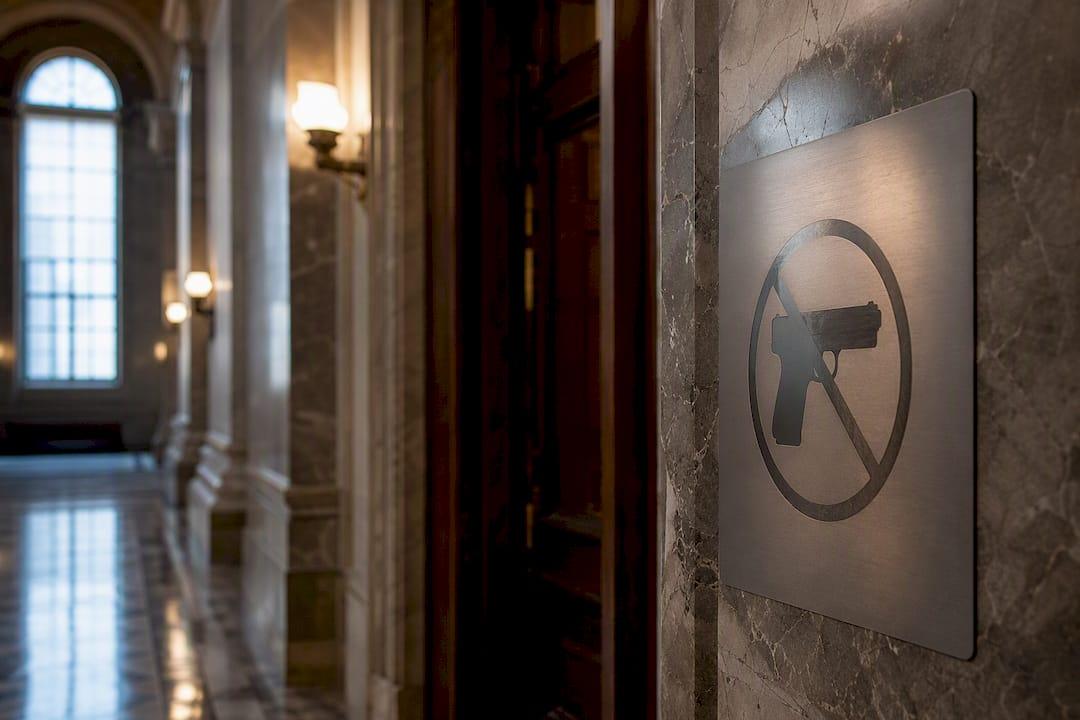
RSA 159:19 creates one of the sharpest edges in the entire statute. Carrying a firearm in a courtroom or any area “used by a court” is a class B felony, full stop. There’s no permit that excuses it and no permitless-carry defense that applies. The scope of “area used by a court” has been interpreted broadly enough to include hallways, waiting areas, and clerk’s offices in shared municipal buildings, so the safest assumption is that if you’re headed anywhere near a courthouse, the firearm stays in the car or at home.
RSA 159:26 governs vehicle transport and, just as importantly, blocks cities and towns from writing their own, stricter carry ordinances. This is the state’s preemption clause: no municipality can pass a local rule that criminalizes conduct RSA 159 permits. That single sentence has stopped a number of local attempts over the years to layer additional restrictions on top of state law, and it means the rules you’re reading here apply the same way whether you’re in Manchester or a small town near the Vermont border.
Pro Tip: Keep a mental (or literal) note of where courthouses sit relative to your regular routes. A RSA 159:19 violation is a felony charge that doesn’t care whether you forgot the gun was in your bag.
Getting an Optional Pistol/Revolver License in New Hampshire
Since carrying inside New Hampshire doesn’t require a license, why would anyone bother getting a Pistol/Revolver License (PRL)? Two words: reciprocity and convenience. Many states that recognize out-of-state carry permits only extend that recognition to states with an actual licensing system, not to permitless-carry status itself. A New Hampshire PRL becomes your ticket to carrying legally when you cross into a state that requires one.
Here’s how the process actually works:
- Determine who issues your license. Residents apply to local officials, typically the chief of police, board of selectmen, or mayor of the municipality where they live. Nonresidents apply directly to NH State Police through the Permits and Licensing Unit, which runs the background check.
- Pay the fee. Residents pay $10; nonresidents pay $100. Both license types remain valid for five years.
- Wait for processing. Issuing authorities generally have 14 days to act on a complete application. There’s no statewide fingerprinting or photo mandate built into the core process, which keeps the paperwork lighter than in many other states.
- Carry your license once approved, and treat it as your reciprocity credential when traveling.
The administrative rules governing this process, known as Saf-C 2100, lay out the finer details for nonresident applications, including grounds for denial or revocation. Common denial triggers include:
- Falsifying information on the application (a separate offense with its own penalties).
- Falling into one of the RSA 159:3 prohibited categories.
- Prior revocation for cause that hasn’t been resolved.
If your application gets denied or your existing license gets revoked, you’re not without recourse. Saf-C 2100 provides an appeal path, and you generally have 30 days to appeal the decision to Concord District Court. That deadline is unforgiving, so if you receive a denial letter, don’t sit on it.
Where You Still Can’t Carry, Even With Permitless Rights
Permitless carry covers most of daily life in New Hampshire, but it doesn’t cover everywhere. Knowing the actual boundaries matters more than knowing the general rule, because the exceptions are where charges happen.
- Courthouses and court-used areas — banned outright under RSA 159:19, felony-level exposure.
- Federal facilities — federal buildings, post offices, and military installations follow federal restrictions that exist independently of New Hampshire law.
- K through 12 schools — school zones carry their own layered restrictions under both state and federal law.
- Private property with posted restrictions — a business owner can lawfully ask you to leave or refuse entry if you’re carrying, though this is a property and trespass issue, not a criminal carry violation on its own, unless you refuse to leave after being asked.
- Prohibited persons, everywhere — RSA 159:3’s bar applies regardless of location. A felony conviction or an active protective order means no carry, period, no matter how permitless the general law is.
Pro Tip: A “No Firearms” sign on a private business doesn’t turn your presence into a crime the way a courthouse does. Refusing to leave when asked, however, can turn it into trespassing. Treat store policies and statutory bans as two very different categories of risk.
One trap catches people who assume permitless carry removed every restriction on firearms generally. It didn’t. Alcohol-licensed premises carry some nuance worth understanding case by case, and long guns in vehicles follow a different statute than handguns do, which the next section covers.
Carrying Firearms in Your Vehicle Under New Hampshire Law
New Hampshire’s vehicle-transport rules are more permissive than many drivers assume. Under RSA 159:26, anyone legally allowed to possess a firearm can carry a handgun in a private vehicle, loaded or unloaded, concealed or in plain view, without any permit. This statute also preempts local governments from adding restrictions on top of it, so a town ordinance can’t legally impose stricter vehicle-carry rules than the state allows.
Where it gets more complicated is long guns. Rifles and shotguns in vehicles fall under a separate statute, RSA 207:7, which treats loaded long guns in a moving vehicle differently than loaded handguns. Someone who assumes “permitless carry covers all my firearms in the car” the same way for a rifle as a pistol can end up creating legal exposure they didn’t anticipate. If you hunt and drive with a rifle in the truck, don’t assume the handgun rule applies to it.
A few practical steps reduce your risk on the road:
- Confirm the destination state’s rules before crossing a border. New Hampshire’s permitless status doesn’t travel with you automatically.
- Check age requirements at your destination. Some states set the minimum carry age at 21, even for residents of permitless states like New Hampshire, where 18 is the floor.
- Treat rental cars exactly like your own vehicle. The rules attach to the firearm and the person, not to vehicle ownership.
- Keep long guns and handguns stored according to their respective statutes, especially on longer trips where both might be in the vehicle.
How Reciprocity Works When You Travel With a New Hampshire License
Permitless carry works beautifully until you cross the state line. New Hampshire’s Director of State Police has the authority to negotiate reciprocity agreements with other states under RSA 159:6-d, and those agreements determine whether your New Hampshire credentials, or lack thereof, mean anything once you leave.
Here’s the part that surprises a lot of gun owners: most reciprocity agreements recognize the New Hampshire Pistol/Revolver License, not the state’s permitless carry status itself. A state that requires visitors to hold a permit generally won’t extend recognition to “I’m from a state where I don’t need one.” If you plan on carrying in Maine, Massachusetts, or further afield, the PRL is often what actually gets you legal recognition, not your New Hampshire residency.
Age differences complicate this further. New Hampshire sets 18 as the threshold for permitless carry, but a number of reciprocity partners only recognize carriers 21 and older. NH State Police itself flags this gap, advising travelers to verify a destination state’s specific rules before assuming any New Hampshire credential will apply.
Before any trip where you plan to carry, run through this checklist:
- Get a PRL if reciprocity matters to you. It’s the credential other states actually recognize.
- Check the destination state’s official public safety or attorney general page directly, not a forum post or a gun shop’s word of mouth.
- Confirm age requirements, since 18 versus 21 catches more travelers than any other single detail.
- Reconfirm before every trip. Reciprocity agreements shift over time as states renegotiate terms.
Penalties and the Mistakes That Turn Into Charges
Most New Hampshire gun owners never come close to a criminal charge. The people who do usually fall into one of a few predictable patterns, and almost all of them are avoidable with a little forethought.
Carrying while prohibited is the most serious. If you’re barred under RSA 159:3, whether from a felony conviction, an active protective order, or a federal disqualifier, and you’re found carrying, you’re facing charges that carry real prison exposure regardless of New Hampshire’s generally permissive carry law.
Courthouse violations under RSA 159:19 are class B felonies, and courts don’t treat “I forgot it was in my bag” as much of a defense. People show up for jury duty, custody hearings, or even to pay a fine and get caught with a firearm they carry every day without a second thought.
False statements on a PRL application carry their own criminal exposure separate from any denial or revocation under Saf-C 2100. Lying about a disqualifying conviction or protective order to get a license approved compounds your legal problems rather than solving them.
Common triggers that lead to police contact include:
- Traffic stops where an officer observes a firearm and asks questions the driver answers poorly.
- Domestic violence calls where a protective order later surfaces and possession becomes its own separate charge.
- Misunderstandings about long-gun vehicle rules under RSA 207:7 during hunting season stops.
Search and seizure issues frequently arise in these stops. How evidence gets collected, whether an officer had legal grounds to search the vehicle, and how statements get documented can all become central to a defense. That’s exactly why speaking with an attorney immediately, before answering further questions, matters more than most people realize in the moment.
What to Do If You’re Stopped or Charged Over a Firearm
The minutes right after a police stop or arrest shape the entire case that follows. A few basic principles protect you regardless of the specifics.
Stay calm, keep your hands visible, and tell the officer if you’re carrying before they discover it themselves. Answer identifying questions, but you’re not obligated to explain your legal theory of the case on the roadside. Anything said in that moment gets written into a report and can be used against you later. If you’re arrested, invoke your right to counsel clearly and stop answering substantive questions until your attorney is present.
Firearm charges in New Hampshire often hinge on details that seem minor in the moment: where exactly a stop happened relative to a courthouse boundary, whether a protective order was still active on the date of the incident, or how an officer characterized what they saw during a vehicle search. Those details decide cases.
Granite Criminal Defense handles exactly these situations, from independent evidence review to challenging how a search was conducted. Beyond the courtroom, the firm also assists with administrative matters like appealing a PRL denial or revocation through the Saf-C 2100 process, work that requires familiarity with an entirely different set of procedures than criminal court.
- Preserve any documentation from the stop: dashcam footage requests, business cards from responding officers, and your own written timeline while memory is fresh.
- Don’t post about the incident on social media before speaking with an attorney.
- Contact counsel before your next scheduled court date, not the week before it.
Timelines matter too. Misdemeanor firearm charges can move through district court in a matter of months, while felony-level charges, including courthouse violations, take considerably longer and carry far more at stake.
What Permitless Carry Actually Changes for Residents
Permitless carry gave New Hampshire residents more flexibility, not fewer responsibilities. That distinction gets lost in a lot of the political noise around the 2017 law. What changed is the paperwork requirement. What didn’t change is who’s allowed to carry at all, where carrying remains a felony regardless of license status, and how seriously courts treat violations when they happen.
The most common misconception coming from clients isn’t about the permitless part. It’s the assumption that removing the license requirement also removed every other restriction, including reciprocity, courthouse rules, and prohibited-person status. It didn’t touch any of those. If anything, permitless carry raises the stakes on knowing the exceptions, because there’s no license-renewal process forcing you to revisit the rules every few years.
Getting a PRL still makes sense for anyone who travels with a firearm regularly. It’s inexpensive, it lasts five years, and it solves a reciprocity problem that permitless status alone can’t touch.
— Rich
How Granite Criminal Defense Handles Firearm and PRL Cases
There are other paths available if you’re facing a firearm charge in New Hampshire: public defenders for those who qualify, or trying to navigate a PRL appeal on your own through Saf-C 2100’s administrative process. Both come with real limits. Public defender caseloads run heavy, and administrative appeals move on strict deadlines that punish anyone unfamiliar with how Concord District Court reviews these decisions.
Granite Criminal Defense brings more than 30 years of New Hampshire courtroom experience to firearm charges, PRL denials, and the felony and misdemeanor cases that often accompany them. That experience means knowing which search-and-seizure arguments actually hold up in New Hampshire courts, how prosecutors in different counties tend to approach RSA 159 charges, and how to build the kind of independent investigation that catches details a rushed case review misses.
If you’re facing a courthouse violation, a prohibited-person charge, or you need to appeal a PRL denial before the 30-day clock runs out, Granite Criminal Defense can review your situation and outline your options. Visit the firm’s practice areas page to see the full range of criminal defense services available, or reach out directly to discuss your specific charge and timeline.
Sources
- Pistol and revolver licensing | NH State Police
- Saf-C 2100 — Administrative rules for pistol and revolver licensing (New Hampshire)
- Pistol Licenses | Bedford NH
FAQ
Can I carry a loaded handgun in my car in NH?
Yes. Under RSA 159:26, anyone who can legally possess a firearm may carry a loaded or unloaded handgun in a private vehicle, concealed or in plain view, without a permit.
Do I need a permit to carry a concealed firearm in New Hampshire?
No. New Hampshire has been a permitless carry state since 2017, meaning anyone 18 or older who isn’t a prohibited person under RSA 159:3 can carry concealed without a license.
Can I carry a gun in a bar in NH?
New Hampshire law doesn’t impose a blanket statutory ban on carrying in establishments that serve alcohol, but individual businesses can post restrictions and ask you to leave if you’re carrying. Consuming alcohol while carrying can create separate legal risk depending on the circumstances.
Can I carry my gun from Massachusetts to New Hampshire?
You can transport a firearm through or into New Hampshire, but Massachusetts has its own strict transport and possession laws that apply while you’re still in that state. Confirm Massachusetts’ current transport requirements before crossing the border, since its rules differ significantly from New Hampshire’s permitless approach.
Do I still need a Pistol/Revolver License if NH is permitless?
Not to carry within New Hampshire, but a PRL becomes valuable if you travel to states that only recognize licensed carriers through reciprocity agreements rather than permitless status.
